Bench Grinder Certifications: Match the Model to Your Market
Two bench grinders can leave the same production line with the same wheel diameter, a similar motor rating and a similar price, and still be very different purchases — because the difference sits in the paperwork. At the decision stage, compliance is not a sticker on the housing. It is a set of documents that names the exact model, the exact electrical and mechanical build, and the market where the unit will be used or resold.

Documentation only does its job when it traces back to the exact build being shipped.
This guide is written for that decision. It covers the document layers to request for Bucktool's 6-inch and 8-inch bench grinders and their low-speed, dual-speed, VFD variable-speed and wet stone variants, the questions to put to a supplier for the US, European and Asia-Pacific markets, and the warranty checkpoint that shows whether the compliance story survives the first year of ownership. Bucktool is a factory-direct power tool brand headquartered in China whose US-facing store states a 2-year warranty, 30-day returns and 3–5 day delivery.
Scope boundary: this guide does not determine which scheme applies in your market or product class — that question belongs to your compliance adviser or the market authority. It defines what to request, and how to check that what you receive actually covers the model you are ordering.
What Compliance Means at the Bench Grinder Decision Stage
Compliance, in purchasing terms, means evidence that a specific product configuration has been evaluated against a named safety standard for a named market, plus an accountable party after the sale. Three consequences follow, and each one changes how quotes should be compared.
Documents attach to configurations, not product families. A dual-speed unit rated at 1725 RPM and 3450 RPM (Bucktool TDS-200DS) is a different electrical and mechanical build from a fixed 1750 RPM low-speed unit (TLG-150S), and a VFD model adjustable from 900 to 3600 RPM (TDS-1200VL) carries drive electronics that neither of the others has. A file that covers 'the grinder series' without naming the model cannot answer the question that matters at resale, at an insurance review or in an audit: was this unit covered?
A mark is not a scope. A label tells you that a scheme was applied to a product. It does not tell you which edition of which standard, which model code, or which market declaration travels with the shipment. The report and the declaration do that work; the label only points to them.
Warranty is part of compliance. A document set with no service path is an incomplete package. Warranty terms identify who is responsible when a motor, switch or bearing fails in the destination market, and whether a distributor or an end user can actually file a claim.
Industry Background: Why Paperwork Now Separates Similar Grinders
The category is large and mature, which is exactly why documentation has become a differentiator rather than an afterthought. Grand View Research puts the global grinding machinery market at USD 6.2 billion in 2025, with bench grinders in the non-precision segment. Within that, a 2025 commercial guide to 6-inch bench grinders describes the 6-inch class as the dominant consumer segment, with prices typically between USD 50 and USD 200 (ANTISHICNC, 2025). When a 6-inch compact machine and an 8-inch heavy-duty model sit at opposite ends of a price band, buyers look for the difference on the spec sheet — and increasingly find it in the documents instead.
The standards side has moved too. UL 60745-1 is the safety standard for motor-operated electric tools, and ANSI approved an updated edition of it on 25 October 2024 (UL Solutions). That single date explains a question worth asking on every quote: which edition does the report reference, and does the supplier have a written position on any gap between the edition cited and the edition currently applied in the destination market?
Two structural effects follow. First, every configuration option — dual speed, VFD control, integrated work lighting, or a water system on a wet stone sharpener — is another build that documentation has to identify. Second, a documentation package is prepared per model and per market rather than per container, so a broad range with thin paperwork is harder to manage than a narrow range with a complete set.
The Four-Layer Documentation Stack
Ask for these four layers as one package, per model. Reviewing them together shows whether a supplier has a complete file or one certificate doing too much work.
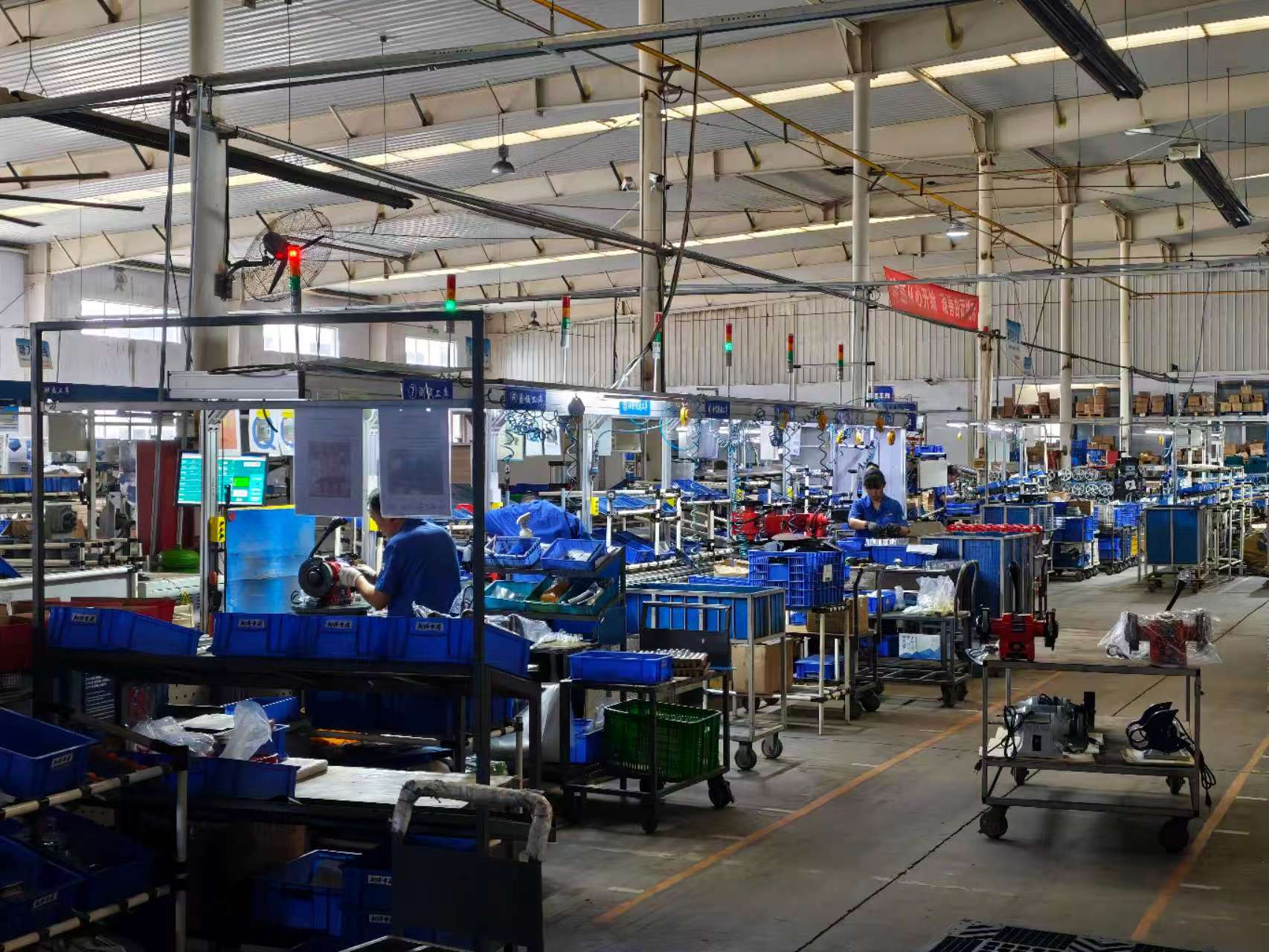
The production record and the document package should describe the same build.
Layer 1 — Model identity and traceability
A complete package starts with the model code as it appears on the rating plate, together with rated voltage and frequency, rated speed or speeds, wheel dimensions and the manual written for that model. The purpose is traceability: the code on the carton, the code on the plate and the code on the report must be the same string of characters.
Incomplete looks like this: a series name, a generic 'bench grinder' cover page, or a manual that covers several models and specifies nothing precisely. If you cannot match the unit in front of you to a line in the document, stop there — everything downstream is unverifiable.
Layer 2 — Safety evaluation evidence
This is the test report or evaluation record. What makes it useful is specificity: standard number, edition or issue date, testing body, date of issue, and the model and electrical configuration actually tested. In the US, that standard is UL 60745-1. In other markets, ask the supplier to name the standard and edition applicable to the destination rather than accept a document that names only a mark.
A report is not automatically invalid because it predates the latest edition, but the gap needs a written explanation. Treat an unexplained edition mismatch as a question to settle before volume, not after.
Layer 3 — Market declaration and marking
The declaration is the bridge between test evidence and a market. It should identify the product, the destination market and the party responsible for placing the product on that market, and it should travel with a manual and labelling in the language of that market.
The most common weakness is the 'international' document — a certificate or declaration that names no destination market at all. It may be genuine and still fail to answer your question. Ask for the specific market in writing.
Layer 4 — Warranty and after-sales coverage
The fourth layer covers what happens after the sale: warranty term and scope, who performs service, how a claim is filed, and which consumables and spare parts are identified for the model. For a distributor, this layer also decides whether the warranty is usable by the end customer or only by the importer.
Regional Requirements: What to Ask in the US, Europe and Asia-Pacific
The questions change by market; the method does not. Name the market, name the model, and require the documents to connect the two.
United States. UL 60745-1 is the named safety standard for motor-operated electric tools, and ANSI approved an updated edition on 25 October 2024. Ask for the report that references it, check the edition and issue date, and confirm the exact model and speed configuration appear within the tested scope. A US reseller should also confirm the responsible party for the market and the warranty terms that apply to US orders.
Europe. Ask the supplier to identify the standard, the edition and the issuing body applicable to the specific model in the destination country, and to provide the accompanying market declaration and a manual in the destination language. Ask who the responsible economic operator is for that market. Because requirements are set per market and product class, confirm the applicable scheme with your compliance adviser or the authority rather than relying on a supplier summary.
Asia-Pacific. This is not one market, and a single regional document should not be accepted as an answer. Ask country by country and expect answers to differ: some destinations require a local declaration and a local responsible party, and manual language requirements can vary between them.
A practical test for any supplier: send one email requesting the package for a named model and a named market. A supplier who handles compliance routinely answers with a file set and a model list. A supplier who does not answers with a certificate and a promise.
Model by Model: Which Bucktool Configuration Raises Which Question
Bucktool's bench grinder range centres on 6-inch and 8-inch machines, with low-speed, dual-speed, VFD variable-speed and wet stone variants. Each variant changes the documentation question, which is why one certificate cannot cover an entire range.
TLG-150S — 6-inch low speed, 1750 RPM. Most often chosen for knife and tool sharpening in a home workshop, where a slow wheel keeps heat manageable. Documentation question: does the report identify the 1750 RPM low-speed build and the 6-inch wheel size, and does the manual state the wheel limits for that model?
TDS-200C4HL — low speed, 1750 RPM. Benchmark Abrasives' bench grinder buyer's guide lists the TDS-200C4HL as a 1750 RPM slow-speed pick. Third-party coverage is useful context but it is not documentation: confirm that the model code on your order matches the code on the report and the declaration, not only the family name used in the review.
TDS-200DS — dual speed, 1725 RPM and 3450 RPM. One machine for sharpening and for grinding. Documentation question: both rated speeds should appear in the rated data, on the rating plate and in the manual. If only one speed is listed, the evaluation scope and the product no longer line up.
TDS-200HD — 8-inch high speed, 3590 RPM. Aimed at heavy-duty metal removal. Documentation question: does the evaluated configuration include the high-speed 8-inch build, and are the wheel specifications in the manual consistent with the wheels you intend to ship with it?
TDS-1200VL — VFD variable speed, 900–3600 RPM. Full-range adjustment for mixed tasks. Documentation question: the drive electronics are part of the build, so ask whether the report covers the VFD configuration specifically, and whether a separate document for that electronics package applies in your market.
SCM8013 — wet stone sharpener, 90–160 RPM. Precision water-cooled sharpening. Documentation question: ask how the paperwork treats wet operation — water handling, the low rotation speed and the assembly instructions — because a dry grinder's document set does not describe this machine.
Where a unit is ordered with an added option such as integrated work lighting, that lighting circuit is part of the electrical build and should sit inside the evaluated configuration. This is where a general brand statement fails: certification status is model- and market-specific, so ask for the package for the exact model and destination instead of relying on a brand-level claim.
Decision Comparison: Six Configurations and Their Documentation Focus
The table is a documentation map, not a ranking. Read it as the checks that must be completed before an order is confirmed; speeds and model codes are as published for the Bucktool range.
| Model | Type and rated speed | Where it fits | Documentation check before ordering |
|---|---|---|---|
| Bucktool TLG-150S | 6-inch low speed, 1750 RPM | Home workshop, knife and tool sharpening | Report and manual name the 1750 RPM low-speed build and the 6-inch wheel size |
| Bucktool TDS-200C4HL | Low speed, 1750 RPM | Precision sharpening where a slow wheel is required | Exact model code appears on the report and declaration, not a series reference |
| Bucktool TDS-200DS | Dual speed, 1725 RPM and 3450 RPM | One machine for sharpening and grinding | Both rated speeds appear in the rated data and on the rating plate |
| Bucktool TDS-200HD | 8-inch high speed, 3590 RPM | Heavy-duty metal removal | High-speed 8-inch configuration sits inside the evaluated scope |
| Bucktool TDS-1200VL | VFD variable speed, 900–3600 RPM | Mixed-task workshops needing full-range adjustment | Drive electronics covered, and named by the document that covers them |
| Bucktool SCM8013 | Wet stone sharpener, 90–160 RPM | Precision water-cooled sharpening | Wet operation, water handling and low rotation speed addressed |
Two decision rules follow. If a model's speed or drive does not appear in the documents you receive, do not treat the model as covered — ask again. And when two quotes differ, compare the package, not only the unit: the same model with and without a complete file set is not the same offer.
Step-by-Step: Verifying a Bench Grinder Documentation Package
This sequence works for a single unit and for a container.
- Fix the market and the responsible party first. Name the destination country and who will be accountable for the product there. Everything else depends on this, and changing it later invalidates the package.
- Write the model list with exact codes and speed configurations. '8-inch grinder' is not a model. TDS-200HD at 3590 RPM is.
- Request the four layers as one file set, per model. Ask for a single submission rather than a certificate now and a manual later.
- Cross-check identity across four documents. Rating plate, test report, market declaration and manual must agree on model code and rated speed or speeds.
- Check the standard edition and issue date. In the US that means UL 60745-1 and its updated edition approved on 25 October 2024; elsewhere it means the standard the supplier has named in writing for your market.
- Confirm warranty terms in writing for that market and order type. A published store policy is the starting point, not the final answer for a distributor agreement.
- Sample-verify, then record the package version. Keep the approved file set with its dates, so a reorder is checked against the same baseline instead of a new set of assumptions.
| Document | What a complete version shows | Escalate if |
|---|---|---|
| Model identification and rating plate | Model code, rated voltage and frequency, rated speed(s), wheel size, serial or batch | Only a series name, or rated data differs from the order |
| Safety test report | Standard number, edition and issue date, testing body, model and configuration tested | Model not listed, or edition gap with no written explanation |
| Market declaration or certificate | Destination market, responsible party, product identification | No market named; 'international' wording only |
| Instruction manual | Destination-market language, model-specific assembly and wheel limits | Generic manual with no model code |
| Warranty terms | Term, covered components, service route, claim process | Verbal only, or differs from published terms without written amendment |
| Spare parts and consumables list | Part identification for the model | No part identification, so service depends on replacing the whole unit |
Institutional buyers — training workshops and maintenance departments — often add a workplace noise question. Ask whether measured noise data exists for the exact model, and treat a general statement about the range as a prompt for more detail rather than an answer.
Warranty as the Final Compliance Checkpoint
Warranty is where compliance stops being paperwork. Bucktool's US-facing store states a 2-year warranty, 30-day returns and 3–5 day delivery. For a direct purchase, those are the published terms to check against your invoice. For a distributor, a volume order or a non-US market, the published terms are the start of a conversation rather than the end of one.
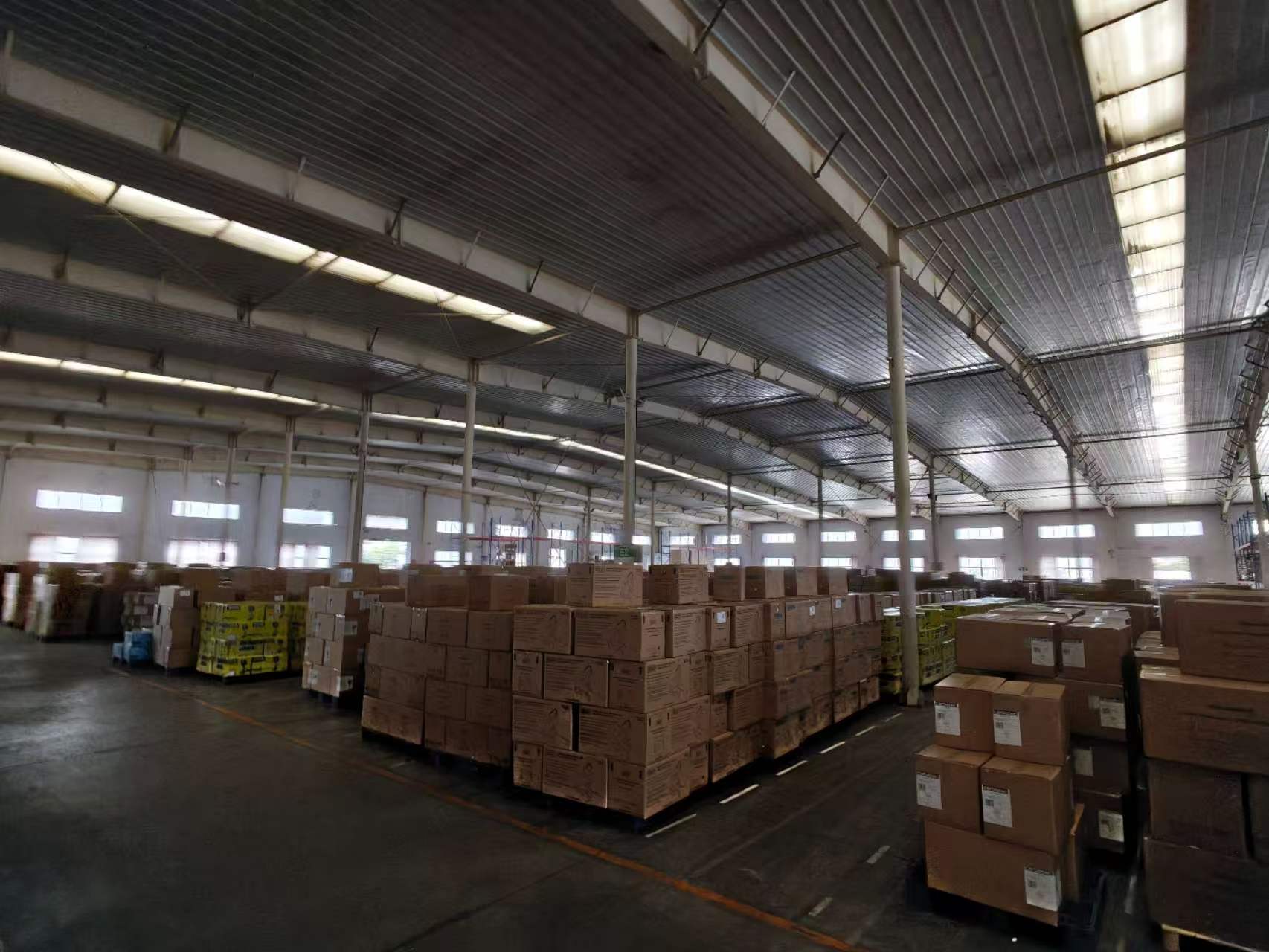
Published delivery terms and the paperwork on the shipment should refer to the same model.
Five questions turn a warranty claim into a verifiable term:
- What is covered — motor windings, switch, bearings, electronic drive board — and what is excluded as consumable, such as wheels?
- Who performs the service in the destination market: the seller, an authorised service partner, or the buyer?
- Does the term match the published policy for that market, and is any difference written into the order documents?
- What does a claim require: proof of purchase, model and serial identification, photographs, or return of the unit?
- Are spare parts and consumables for the model identified, so a repair is possible beyond the warranty period?
For a distributor, two more questions matter: is the warranty usable by the end customer or only by the importer, and who bears freight on a claim in the destination market? Settling this before the order is cheaper than discovering the answer in year two.
Use Cases: Three Buyer Profiles and Their Documentation Load
Home workshop and small bench grinder buyers. The load is light but not zero, especially across borders. A 6-inch low-speed machine such as the TLG-150S at 1750 RPM or the TDS-200C4HL covers knife sharpening and general tool maintenance; the practical checks are manual language, the model code on the plate and the warranty route. A compact unit that arrives with a generic manual and no model code is harder to service than it needs to be.
Metalworking and heavy-duty use. High-speed removal points to the 8-inch TDS-200HD at 3590 RPM, while a mixed shop may prefer the TDS-200DS and its 1725/3450 RPM toggle. Here the question is configuration coverage, because the high-speed 8-inch build and the dual-speed build are not the same product — a shop that cannot show which build was evaluated carries the risk itself.
Woodworking and knife sharpening. Heat control drives the choice: the TLG-150S at 1750 RPM, or the SCM8013 wet stone sharpener at 90–160 RPM. Documentation focus shifts to wet operation and to whether the manual describes the water system and the low-speed assembly for that specific model.
Resellers and distributors. The load is per SKU and per market. A small range with a complete package is easier to sell than a broad range with one certificate, and the warranty questions above belong in the distributor agreement rather than in an email after the first claim.
Frequently Asked Questions
Which standard should a bench grinder's safety documentation reference in the US?
UL 60745-1 is the safety standard for motor-operated electric tools, and ANSI approved an updated edition of it on 25 October 2024 (UL Solutions). When a report arrives, check three things: the standard number, the edition or issue date of that edition, and whether the report lists the exact model you are ordering. A report issued against an earlier edition is not automatically wrong, but it is a question worth resolving in writing before you commit to volume.
Does a certification mark on the label clear a bench grinder for my market?
No. A mark shows that a scheme was applied to something; it does not identify the model, the edition of the standard, or the market declaration that travels with the unit. A complete answer combines a report naming the model and standard edition, a declaration identifying the destination market and responsible party, and a manual in the language of that market. Which scheme applies to your market and product class is a question for your compliance adviser or the market authority.
Do dual-speed and VFD bench grinders need different documentation from fixed-speed models?
In practice they need documentation that matches the build. The Bucktool TDS-200DS is rated at 1725 RPM and 3450 RPM, and both speeds should appear in the rated data and on the rating plate; the TDS-1200VL uses VFD control across 900–3600 RPM, which adds drive electronics that a fixed 1750 RPM unit such as the TLG-150S does not have. Ask whether the report covers those drive electronics, and whether a separate document for that electronics package applies in your market.
Does a fuller documentation package change the cost of a bench grinder order?
It changes how quotes are compared more than it changes the unit price. Documents are prepared per model, per configuration and per market, so administrative time and any per-model testing sit somewhere in the supply chain, and two quotes are comparable only when both include the same package for the same model and market. For market context only, a 2025 commercial guide to 6-inch bench grinders describes that class as the dominant consumer segment with prices typically between USD 50 and USD 200 (ANTISHICNC); a quote for a specific Bucktool model, market and package should be requested directly.
What should I check on a sample before confirming a volume order?
Check the physical unit against the paperwork: the rating plate model code, the rated speed or speeds, and the rated voltage and frequency should match the documents exactly. On a dual-speed unit, run both speeds; on a low-speed sharpening unit, confirm the 1750 RPM wheel behaviour with the wheel you intend to use; on the wet stone sharpener, check water handling and the 90–160 RPM rotation. Confirm the manual is in the destination language, the label carries the model code, and the carton marking matches the order.
How does documentation timing affect delivery on a bench grinder order?
For Bucktool's direct US orders, the store states 3–5 days delivery. A distributor or volume order is a different timing question: ask when the documentation package is issued relative to dispatch, and request draft copies before production so model codes and speeds can be checked while changes are still inexpensive. Put the sample lead time and the documentation timing in the same message so neither becomes the critical path. To start, request the package and a sample for the model you are considering at service@bucktool.com.
Conclusion
Compliance is a comparison criterion, and at the decision stage it is often the one that decides whether a purchase is repeatable. The sequence is short: name the market, name the exact model and speed, request the four-layer package, check that the standard edition and the model code agree, confirm the warranty route in writing, then verify on a sample before volume.
Applied to the Bucktool range, that sequence sorts the options quickly. The TLG-150S and TDS-200C4HL raise low-speed and 6-inch wheel questions; the TDS-200DS raises a two-speed question; the TDS-200HD raises an 8-inch high-speed question; the TDS-1200VL raises a drive-electronics question; the SCM8013 raises a wet-operation question. Each one is answerable in writing, and each answer belongs in the order file.
To put the sequence to work, request the documentation package and a sample for the model you are considering from Bucktool at service@bucktool.com, or through bucktool.com. A distributor enquiry is more useful when it names the destination market, the model codes and the speed configurations in the first message.
Have Questions or Need More Details?
Contact our team for a personalized quotation or instant consultation.
Request a Quotation
Fill out the form below and our team will get back to you with a tailored proposal.
WhatsApp Direct Chat
Prefer to chat in real-time? Message us on WhatsApp for instant assistance & quick answers.
- Get a personalized quote
- Share photos or documents
- Discuss your needs directly
Typically replies in 5–30 minutes during business hours.