8-Inch vs 10-Inch Bench Grinder: Which Size Delivers Better Value?
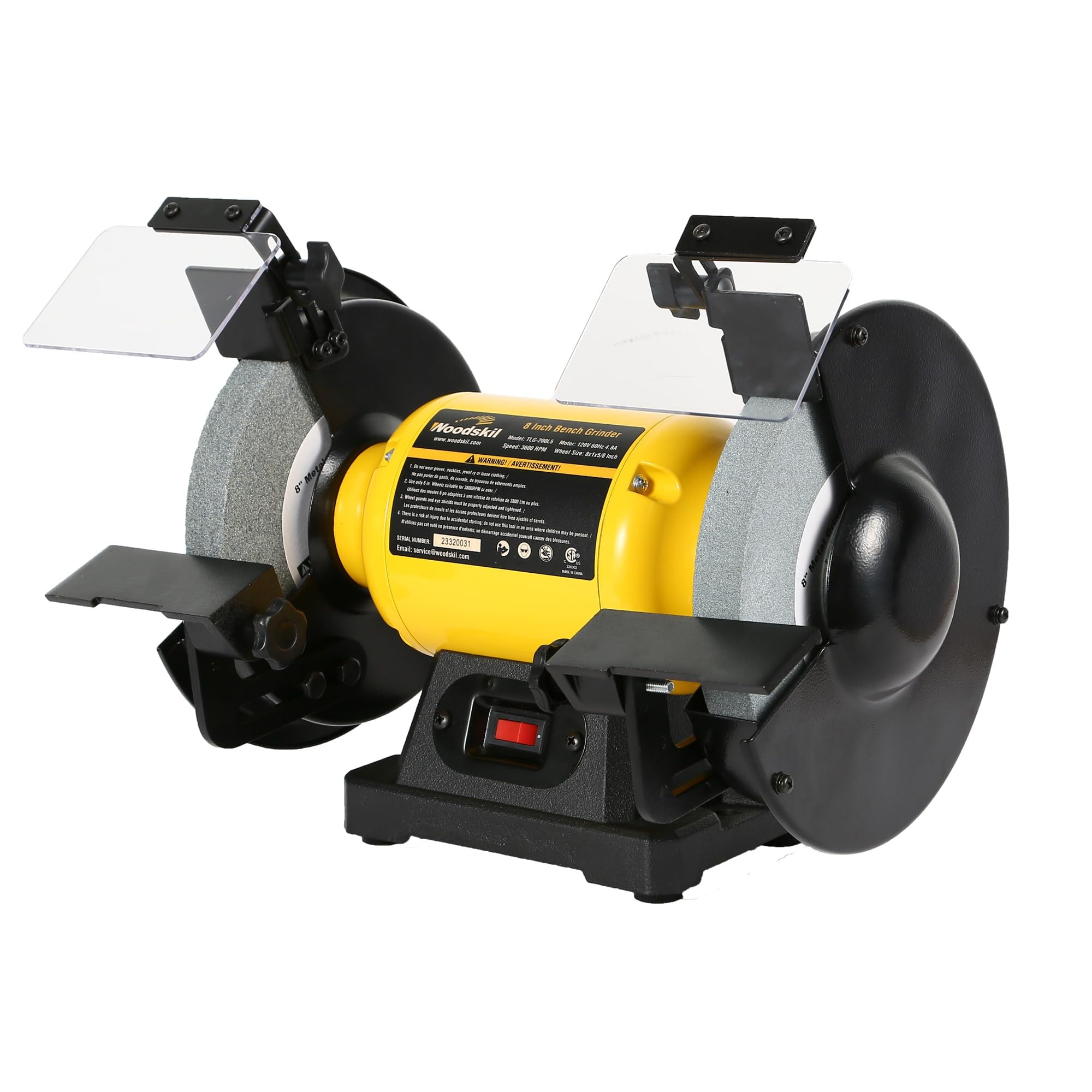
For most home workshops and small professional shops that deburr small parts, sharpen hand tools and touch up edges a few times a week, the 8-inch machine is the better value. It covers the majority of sharpening and light grinding jobs from a smaller footprint, and it keeps you in the wheel size that is easiest to source and replace. The 10-inch machine becomes the better value in a different situation: when your daily work is dominated by wide blades, thick stock or heat-sensitive edges, where extra abrasive mass and a low-speed cut reduce wheel changes and burned edges. This guide compares the two sizes as BUCKTOOL actually sells them — the BUCKTOOL 8 Inch Bench Grinder (TLG-200L5A) and the BUCKTOOL 10-inch Bench Grinder (TDS-250) — on the four factors that decide long-term value: wheel life, motor load, space, and application fit.
Problem Definition: What “Value” Actually Means in a Bench Grinder
The purchase price of a bench grinder is a one-time number. Value is a running number, and it is decided by four things that a size comparison exposes immediately.
- Wheel consumption. A grinding wheel is a consumable. Diameter shrinks every time the wheel is used or dressed, and a larger wheel starts with more abrasive mass, so it survives more sessions before it has to be replaced.
- Motor duty. A heavier wheel needs more torque to hold spindle speed. If the motor has no headroom, the wheel slows under hand pressure, the edge burns, and the operator compensates with longer grinding time.
- Bench space. A 10-inch machine needs a deeper bench, more wall clearance for the guard, and more sweep room for long workpieces. In a home shop, that space has a real cost.
- Job coverage. A machine that is too small for the work forces a second grinder, a slower workflow, or both.
Everything else — colour, badge, marketing tier — is secondary to those four variables.
Industry Background: Where 8-Inch and 10-Inch Sit in the Market
The global grinding machinery market was valued at USD 6.2 billion in 2025, with bench grinders counted as a key non-precision segment (Grand View Research). Inside that category, the 6-inch machine is the dominant consumer size, typically retailing between USD 50 and USD 200 (ANTISHICNC, 2025). Buyers who move up to an 8-inch or 10-inch wheel are leaving the volume tier and buying for duty cycle, wheel life and edge quality rather than for a first grinder.
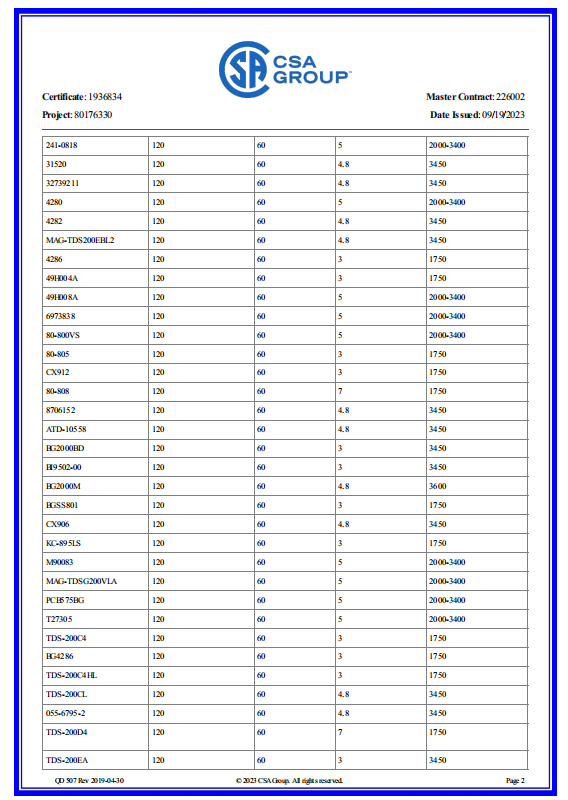
Two structural facts shape that move. The first is regulation: UL 60745-1, the safety standard covering motor-operated electric tools, was updated and approved by ANSI on October 25, 2024 (UL Solutions). The second is supply: BUCKTOOL, a power tool manufacturer founded in 1955 and headquartered in China, sells factory-direct into the US market, publishes CSA certificate numbers 1936834 and 70199403 for its wobble-free bench grinder motor platform, and states 30-day returns, a 2-year warranty and 3–5 day delivery for US customers.
Detailed Solution: The Two Options Under Comparison
Option 1 — BUCKTOOL 8 Inch Bench Grinder (TLG-200L5A)
BUCKTOOL lists this machine as the bucktool 8 Inch Bench Grinder, documented at 3/4 HP, 4.8 A and 3600 RPM with an 8-inch wheel in a table grinder configuration. It is a high-speed machine, and that is precisely what makes it efficient for the jobs most shops actually run: deburring a cut edge, squaring a chisel, restoring a screwdriver tip, knocking the damage off a struck tool. It mounts on a normal bench and leaves working room around it.
Option 2 — BUCKTOOL 10-inch Bench Grinder (TDS-250)
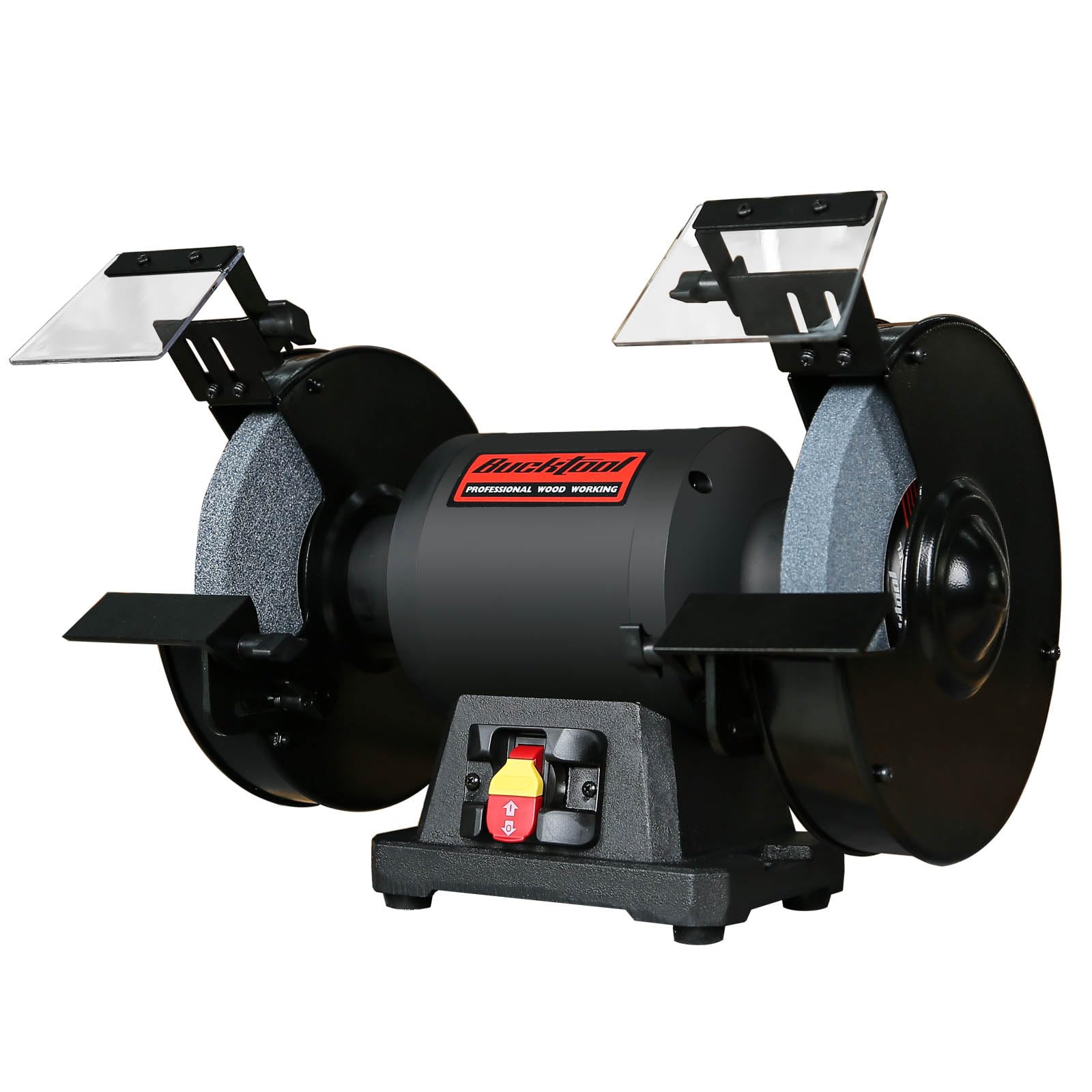
The second option is the bucktool 10-inch Bench Grinder, model TDS-250, described by the manufacturer as a 10-inch low-speed bench grinder. A larger wheel carries more abrasive mass and presents a longer contact arc where abrasive meets steel, while the low-speed design keeps rim speed down so less heat is driven into the edge. That combination changes what the machine is good at — and it also changes what it asks of your bench and your motor.
Size and Speed Are Two Separate Decisions
Reading “bigger” as “slower” is the most common mistake in this comparison. BUCKTOOL builds bench grinders across both dimensions at the same time: a 6-inch low-speed model (TLG-150S), a 6-inch small high-speed model (TDS-150CLA), an 8-inch low-speed model (TDS-200C4HL), an 8-inch high-speed model (TDS-200HD), an 8-inch dual-speed model (TDS-200DS), an 8-inch VFD variable-speed model (TDS-I200VL), the 10-inch low-speed TDS-250, and a 10-inch wet stone sharpener (SCM8103).
That matters for the value question. If cool, controlled sharpening is what your shop is missing, an 8-inch machine already provides it: the BUCKTOOL TDS-200C4HL, a 1750 RPM slow-speed grinder, was recognized as “Top Rated / Heavyweight Champ” among slow-speed bench grinders for professional sharpening in Benchmark Abrasives' 2026 best bench grinders guide. You do not have to move to 10 inches to get a low-speed cut. What the 10-inch size adds is abrasive mass, wheel life and reach on longer work.
Wheel Life: Where the 10-Inch Earns Its Keep
Wheel life is a function of abrasive mass, not diameter alone. A 10-inch wheel starts with more material above the minimum usable diameter, so it can be dressed more times before replacement, and it wears more slowly per unit of work because the same material removal is spread across a larger abrasive surface.
The counterweight is cost concentration: the larger wheel costs more per unit, so the advantage only appears if you genuinely grind enough to consume wheels. For a shop that dresses a wheel a few times a month, that extra abrasive mass is unused capacity. For a shop that sharpens daily, the longer interval between wheel changes is the single biggest running-cost difference between the two sizes.
Wheel life is also not only about size, because vibration is the quiet wheel killer. BUCKTOOL's wobble-free bench grinder motor platform — an induction motor with a fully enclosed ball-bearing structure and a cast-iron base for vibration reduction — targets exactly that problem. A wheel that runs true needs less dressing, and every dressing removes abrasive you already paid for.
Motor Load: Why a Bigger Wheel Is Not Free
Motor load rises with wheel mass, contact-arc length and applied pressure. An 8-inch wheel on a documented 3/4 HP, 4.8 A, 3600 RPM drive is a matched combination: the motor holds speed under normal hand pressure on the jobs the machine is designed for. A 10-inch wheel adds rotating mass and lengthens the arc where abrasive meets steel, so the same hand pressure produces more resistance at the spindle.
A low-speed 10-inch design manages that resistance by trading rim speed for torque and cooling, which is why the TDS-250 is specified as a low-speed machine rather than a high-speed one. The practical rule for buyers: never treat wheel diameter as a free upgrade. If the motor rating, the wheel guard and the tool rest are not scaled to the wheel, the extra size shows up as slower cutting, more heat in the work and shorter motor life — the opposite of value.
Space Requirements: The Cost That Never Appears on a Spec Sheet
Bench grinders are sold by wheel diameter but installed by footprint. Moving from 8 inches to 10 inches increases the guard envelope, the distance from the spindle to the outer edge of the wheel, and the clearance needed behind the machine. It also increases the room required to present a long workpiece to the wheel without hitting a wall, a vise or a shelf.
In a dedicated shop this is a planning detail. In a home workshop or garage where the grinder shares a bench with a drill press and a vise, it can be the deciding constraint. Before ordering the larger machine, measure the bench depth, the distance to the nearest obstruction behind the spindle, and the working envelope your longest tool needs. If the 10-inch envelope does not fit comfortably, 8 inches is the higher-value choice regardless of what the specification sheet says.
Typical Applications: Which Size Fits Which Shop
Choose 8-inch when the work is dominated by short parts and hand tools — chisels, plane blades, drill bits, screwdrivers, mower blades, small deburring jobs — and you want one machine on a standard bench. The 3600 RPM TLG-200L5A removes material quickly on these jobs without demanding extra shop space.
Choose 10-inch when the work is dominated by wide or thick stock, long straight edges, or heat-sensitive tool steel that must not lose temper. The longer contact arc and greater abrasive mass of a low-speed 10-inch machine suit longer grinding sessions and reduce how often you stop to dress or swap a wheel.
Choose neither, and look at the wider line, when the real requirement is variable speed or wet sharpening. BUCKTOOL covers those needs with an 8-inch VFD variable-speed grinder (TDS-I200VL) and a 10-inch wet stone sharpener (SCM8103) — a different answer to a different question.
Step-by-Step: Choosing Between 8-Inch and 10-Inch in Six Steps
Step 1 — Measure the bench before comparing specifications
Record bench depth, wall clearance behind the spindle, and the sweep distance your longest tool needs. A machine that fits badly is a machine you use less, and a grinder you avoid is the worst value in the shop.
Step 2 — Separate your heaviest job from your most frequent job
The heaviest job sets the motor requirement. The most frequent job sets wheel wear and running cost. Most buyers over-weight the heaviest job by default; the frequent job is what you will actually pay for over the next few years.
Step 3 — Fix the speed class first, then the size
Decide whether you need high-speed stock removal, a low-speed cut for heat-sensitive edges, or variable speed. Size is the second decision, not the first — and BUCKTOOL offers low-speed and high-speed machines in more than one wheel diameter.
Step 4 — Size the wheel to wheel life and reach
If you dress or replace wheels often, more abrasive mass pays for itself. If your parts are short and you sharpen occasionally, 8 inches is enough and the extra mass of a 10-inch wheel is capacity you will never use.
Step 5 — Verify the safety and electrical listing
Confirm the listing mark, the key-controlled safety switch, the eye shield and the tool rest on the exact model and voltage you intend to order. Do not infer safety from wheel size.
Step 6 — Confirm support before you pay
Check the warranty, the return window, the delivery time and the availability of replacement wheels and accessories for that specific size. A size you cannot re-order consumables for is not a value at any price.
Use Cases: How the Two Sizes Behave in Real Shops
Home Workshop and Tool Maintenance
Home workshops and small-workshop operators typically sharpen drills, cutters, screwdrivers and chisels. The recurring pain points are dull tools, the cost and delay of sending work out, and the risk of overheating an edge on a fast wheel. An 8-inch high-speed machine handles this workload from a compact footprint; where the operator wants to avoid any risk of burning steel, a low-speed configuration is the better match.
Knife Sharpening and Woodturning Tools
Knife makers and woodturners shape blanks, grind bevels and set final edges. Hand grinding is slow, and high-speed grinding can overheat and soften blade steel. One owner of a BUCKTOOL low-speed grinder put it simply: it makes sharpening woodturning tools far easier without risking burning the steel. For this audience, the speed class usually matters more than the extra inch of wheel diameter — although a 10-inch wheel adds reach on long blades.
Metalworking and Deburring
Metal fabricators and machinists deburr, trim edges and finish carbon steel, stainless steel and aluminium components. This is the workload where a high-speed 8-inch machine is most at home, and where material removal rate matters more than finesse. Shops running long, wide or thick stock for extended sessions are the natural candidates for the larger wheel.
Automotive Repair and Refurbishment
Auto repair shops restore rusted components and worn hand tools, and manual grinding is slow. One owner reported sharpening multiple plane blades in approximately 3–5 minutes each, producing smooth, square edges that reached a very sharp cutting edge after honing on a diamond stone. Another owner who upgraded from a 1/3 horsepower machine to a BUCKTOOL 3/4 horsepower model for metal and knife work reported that the grinder held speed under load and did not wander across the bench. That is the 3/4 HP class this comparison treats as the 8-inch option.
Comparison Table: 8-Inch vs 10-Inch Bench Grinder
| Decision factor | BUCKTOOL 8 Inch Bench Grinder (TLG-200L5A) | BUCKTOOL 10-inch Bench Grinder (TDS-250) | Why it affects value |
|---|---|---|---|
| Wheel diameter | 8 inch | 10 inch | Larger wheel = more abrasive mass = more dressings before replacement |
| Documented spindle speed | 3600 RPM (high speed) | Low-speed design | High speed favours fast stock removal; low speed favours heat control on edges |
| Documented motor | 3/4 HP, 4.8 A | Confirm the current motor rating on the product listing | Wheel mass and contact arc must be matched by motor headroom |
| Bench footprint and clearance | Fits a standard bench | Needs greater depth and rear clearance | Space is a real cost in a home or shared workshop |
| Best-fit work | Short parts, hand tools, deburring, touch-up | Wide blades, thick stock, long edges, heat-sensitive steel | Machines are only good value on the jobs they actually suit |
| Vibration control | BUCKTOOL wobble-free motor platform: induction motor, fully enclosed ball bearings, cast-iron base | Same platform approach across the bench grinder line | Less wobble means less dressing, and dressing consumes wheel life |
| Running-cost driver | Lower wheel cost per unit, shorter interval between changes | Higher wheel cost per unit, longer interval between changes | Compare cost per usable grinding hour, not cost per wheel |
| Certification evidence | CSA 1936834 and CSA 70199403 are published for BUCKTOOL's wobble-free bench grinder motor platform | Verify the listing mark for the exact model and voltage ordered | A verifiable listing matters more than nominal wheel size |
Before You Pay: Compliance and Support Checks
In the US, motor-operated electric tools sit under UL 60745-1, and the updated standard was approved by ANSI on October 25, 2024 (UL Solutions). For an 8-inch or 10-inch bench grinder, a visible listing mark on the unit or its product listing is a more meaningful purchase signal than wheel diameter, because it speaks to the electrical and mechanical safety of the machine you will plug in.
BUCKTOOL documents a key-controlled safety switch, a lockable adjustable tool rest, an enclosed ball-bearing motor structure and a 3X magnifier eye shield on its wobble-free grinder platform, and publishes CSA certificate numbers 1936834 and 70199403 for that platform. Alongside the hardware, the commercial terms matter to total value: the brand states 30-day returns, a 2-year warranty and 3–5 day delivery for US customers, which reduces the risk attached to choosing the wrong size.
Limitations and Trade-Offs Worth Knowing Before You Buy
A decision guide that only lists advantages is not useful. Four honest limitations apply to this comparison.
- Setup takes time. Owners of BUCKTOOL bench grinders consistently note that initial setup and precise tool-rest adjustment take patience. If you change angles frequently, budget time for dialling in the rest rather than assuming it is a one-minute job.
- A larger wheel does not fix an underpowered motor. Diameter is a load, not a bonus. The 10-inch size only pays off when the motor, guard and tool rest are matched to it.
- Bigger wheels cost more per unit and occupy more bench. Both effects reduce value if your grinding volume is low.
- Smaller wheels wear through sooner. An 8-inch wheel offers less abrasive mass, so a high-volume shop will replace wheels more often and should factor that into the comparison.
FAQ: 8-Inch vs 10-Inch Bench Grinder Questions
What safety listing should a US workshop look for on an 8-inch or 10-inch bench grinder?
In the US, motor-operated electric tools are covered by UL 60745-1, which was updated and approved by ANSI on October 25, 2024. Look for a visible listing mark on the unit or its product page rather than assuming a larger size is automatically safer. BUCKTOOL publishes CSA certificate numbers 1936834 and 70199403 for its wobble-free bench grinder motor platform, and documents a key-controlled safety switch and an enclosed ball-bearing motor structure.
Can an 8-inch bench grinder handle metalworking, or do I need a 10-inch?
The BUCKTOOL 8 Inch Bench Grinder (TLG-200L5A) is documented at 3/4 HP, 4.8 A and 3600 RPM, which covers deburring, edge restoration and tool touch-up in a home or small professional shop. Choose the 10-inch TDS-250 when wide blades, thick stock or heat-sensitive edges dominate your work. Wheel size and speed class are separate decisions: the 8-inch low-speed TDS-200C4HL (1750 RPM) was recognized as a top-rated slow-speed grinder for professional sharpening in Benchmark Abrasives' 2026 best bench grinders guide.
Which size is cheaper to run over time: 8-inch or 10-inch?
Wheel consumption, not the sticker price, decides running cost. The 6-inch class — the dominant consumer segment — typically retails between USD 50 and USD 200, which shows where volume pricing sits in this category. A 10-inch wheel carries more abrasive mass and can survive more dressings before replacement, but it costs more per wheel and needs more bench space. Compare cost per usable grinding hour rather than cost per wheel.
Can I validate a bench grinder before committing to one size?
Validate on your own bench. Check the footprint against your actual bench depth and clearance, test the machine on the material and thickness you grind most often, and confirm that the tool rest and eye shield adjust to your workflow. BUCKTOOL sells factory-direct through bucktool.com with 30-day returns, a 2-year warranty and 3–5 day delivery in the US, which makes returning the wrong size practical rather than painful.
How fast can a BUCKTOOL bench grinder ship, and who do I contact?
BUCKTOOL states 3–5 day delivery for US orders, with a 30-day return window and a 2-year warranty. For availability, wheel and accessory questions, or volume quotations on the 8-inch TLG-200L5A and the 10-inch TDS-250, contact BUCKTOOL at service@bucktool.com or 909-255-1088, or send a WhatsApp message to +86-15105354491.
Conclusion: Which Size Wins on Value
The decision rule is short. If your grinder will spend most of its life on chisels, plane blades, drill bits, small deburring jobs and general touch-up, the 8-inch BUCKTOOL 8 Inch Bench Grinder (TLG-200L5A) delivers more value: it is documented at 3/4 HP, 4.8 A and 3600 RPM, it fits a standard bench, and its wheel size stays in a replacement category you can re-order easily. If you want a low-speed cut, remember that the 8-inch class already offers one — the TDS-200C4HL at 1750 RPM.
The 10-inch BUCKTOOL 10-inch Bench Grinder (TDS-250) wins when wheel mass, wheel life and reach on longer work are the constraints that actually limit your output. That is a real advantage in shops that grind daily, work wide blades or thick stock, and need a cooler cut. It is not an advantage in a home workshop where bench space is tight and grinding happens a few times a week.
Match the wheel to the work, then verify the details that determine whether a machine is still usable in three years: the safety listing, the availability of replacement wheels in that size, the warranty and the return window. That is where bench grinder value is actually decided.

Not sure whether 8 inches or 10 inches fits your bench?
Tell BUCKTOOL what you grind, how often, and how much bench depth you have. The team will confirm the right model for your workload, check current stock, and answer wheel and accessory questions. Request a quote, ask for the catalog, or arrange a sample: service@bucktool.com | 909-255-1088 | WhatsApp +86-15105354491 | bucktool.com
Have Questions or Need More Details?
Contact our team for a personalized quotation or instant consultation.
Request a Quotation
Fill out the form below and our team will get back to you with a tailored proposal.
WhatsApp Direct Chat
Prefer to chat in real-time? Message us on WhatsApp for instant assistance & quick answers.
- Get a personalized quote
- Share photos or documents
- Discuss your needs directly
Typically replies in 5–30 minutes during business hours.