How to Evaluate a Bench Grinder Supplier: Capacity, Consistency, and Delivery Checks
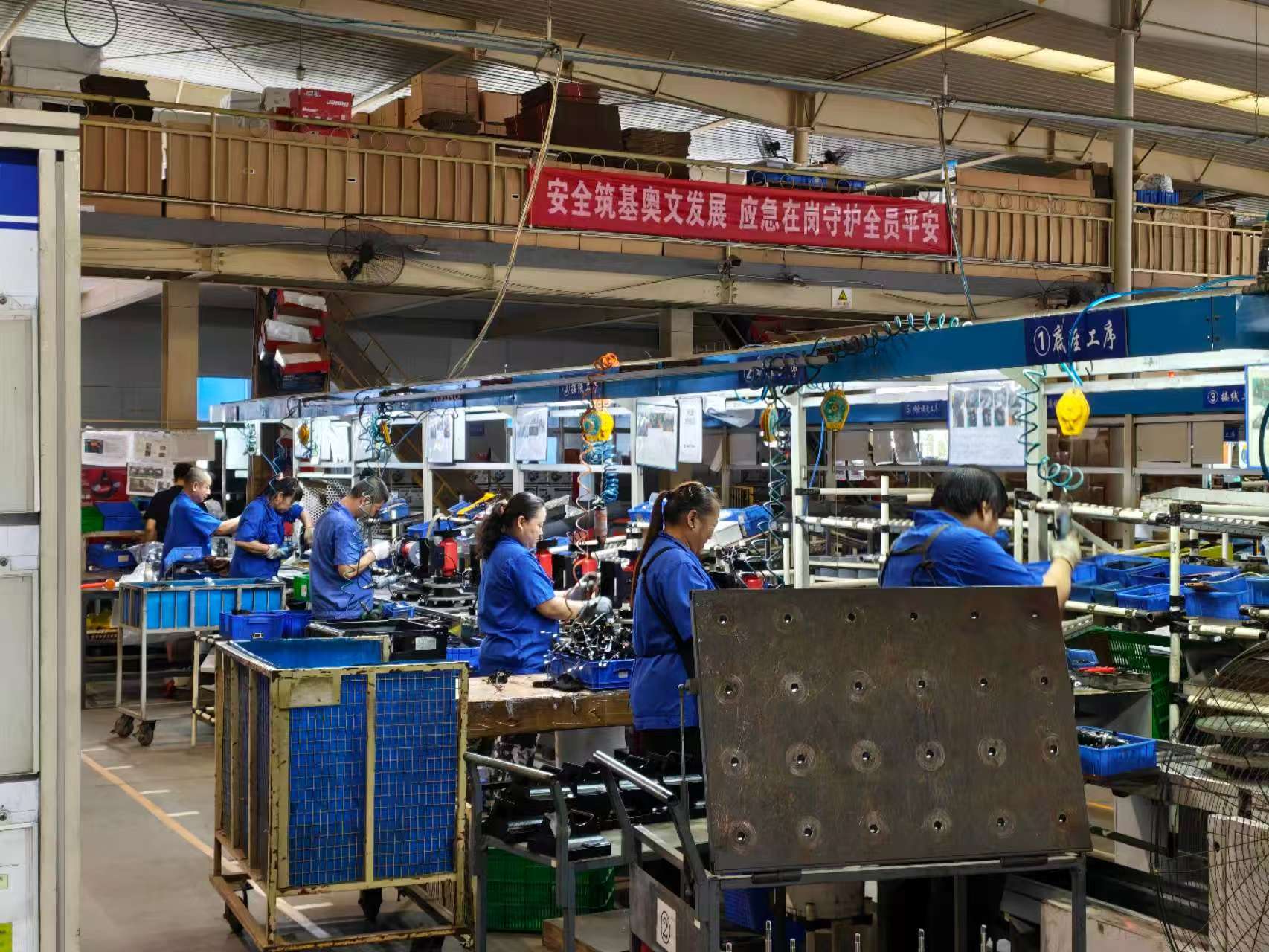
The short answer: evaluate a bench grinder supplier on three checks, in this order — capacity (which wheel sizes and speed configurations the factory can build and repeat), consistency (whether unit two matches unit one in motor performance, wheel balance and vibration), and delivery (whether the quoted shipping window survives repeat and mixed-SKU orders). Unit price and product photos only become meaningful after those three checks pass.
A bench grinder sourcing problem is rarely a design problem. It is usually a repeatability problem or a logistics problem: one sample performs well, then the second order arrives with a different wheel, a longer lead time, or packaging nobody approved. BUCKTOOL is a power tool brand founded in 1955, headquartered in China and positioned for users who need high-performance, reliable and cost-effective metal and woodworking power tools, with factory-direct supply and after-sales support. Its published bench grinder documentation is a useful worked example of the specific evidence a buyer should demand from any supplier.
What a Bench Grinder Supplier Evaluation Has to Prove
Supplier evaluation is not a general judgement about quality. It is a set of proofs a buyer collects before committing to repeat orders.
- Range proof: the supplier can build the wheel diameters and speed configurations your customers actually buy — not just the one model shown in the catalog header.
- Repeatability proof: the parameters published for the first order are the parameters shipping on the fifth order.
- Schedule proof: the delivery window quoted at quotation stage holds during peak demand and on mixed-SKU orders.
- Compliance proof: certification documents exist for the exact model you purchase, not for the product category in general.
Three evaluation gaps cause most of the damage.
Gap 1: evaluating a single sample
One bench grinder, tested once, proves that a supplier can produce one acceptable unit. It does not prove that wheel balance, motor parameters and table alignment are controlled in production rather than corrected by hand at the end of the line. The consistency check exists to separate the two.
Gap 2: range-gap blindness
A supplier may market a broad "bench grinder" range while the underlying SKU list covers one wheel diameter or a single speed configuration. A distributor selling to home workshops, woodworking shops and metalworking customers needs 6-inch, 8-inch and larger configurations; the gap usually appears only when the first order is placed.
Gap 3: treating an estimate as a commitment
Delivery dates are frequently agreed verbally and recorded nowhere. When volumes rise, the buyer discovers that the quoted window applied to a trial order, not to ongoing supply.
Industry Background: What Bench Grinder Buyers Are Sourcing Into
Category scale determines how much choice a buyer has. Grand View Research reported global grinding machinery revenue of USD 6.2 billion in 2025, with bench grinders forming part of the non-precision segment ("Grinding Machinery Market Size & Share Report, 2026–2033"). At that scale, buyers can select for fit instead of accepting whichever factory responds first.
Within the category, 6-inch bench grinders are described as the dominant consumer segment, with prices typically ranging from USD 50 to USD 200 (ANTISHICNC, "Bench Grinder: A Comprehensive Guide to 6-Inch Power Tools," 2025). That band is a useful sanity check: a supplier claiming premium performance at a cost position the segment does not support is describing marketing, not manufacturing.
Compliance expectations also move. ANSI approved the updated UL 60745-1 safety standard for motor-operated electric tools on 25 October 2024 (UL Solutions). Bench grinders belong to the motor-operated tool family, so a supplier claiming US-market readiness should be able to name the standard version it designs against and produce documentation at model level.
Configuration spread is the third background factor. A bench grinder line is no longer a single motor on a single base. The Bucktool bench grinder line, for example, lists ten series and ten models spanning 6-inch to 10-inch wheel sizes and covering low speed, high speed, dual speed, VFD variable speed with digital display, and a water-cooled wet stone sharpener. Sourcing across that spread is what turns a simple product question into a capacity question.
The Three-Check Framework
Check 1 — Capacity: can the supplier build the range you sell?
Capacity has two halves. Breadth is which configurations exist as real SKUs. Repeat capacity is whether the factory can produce those SKUs in the volumes and cycle time your business needs. Buyers usually verify the first and assume the second.
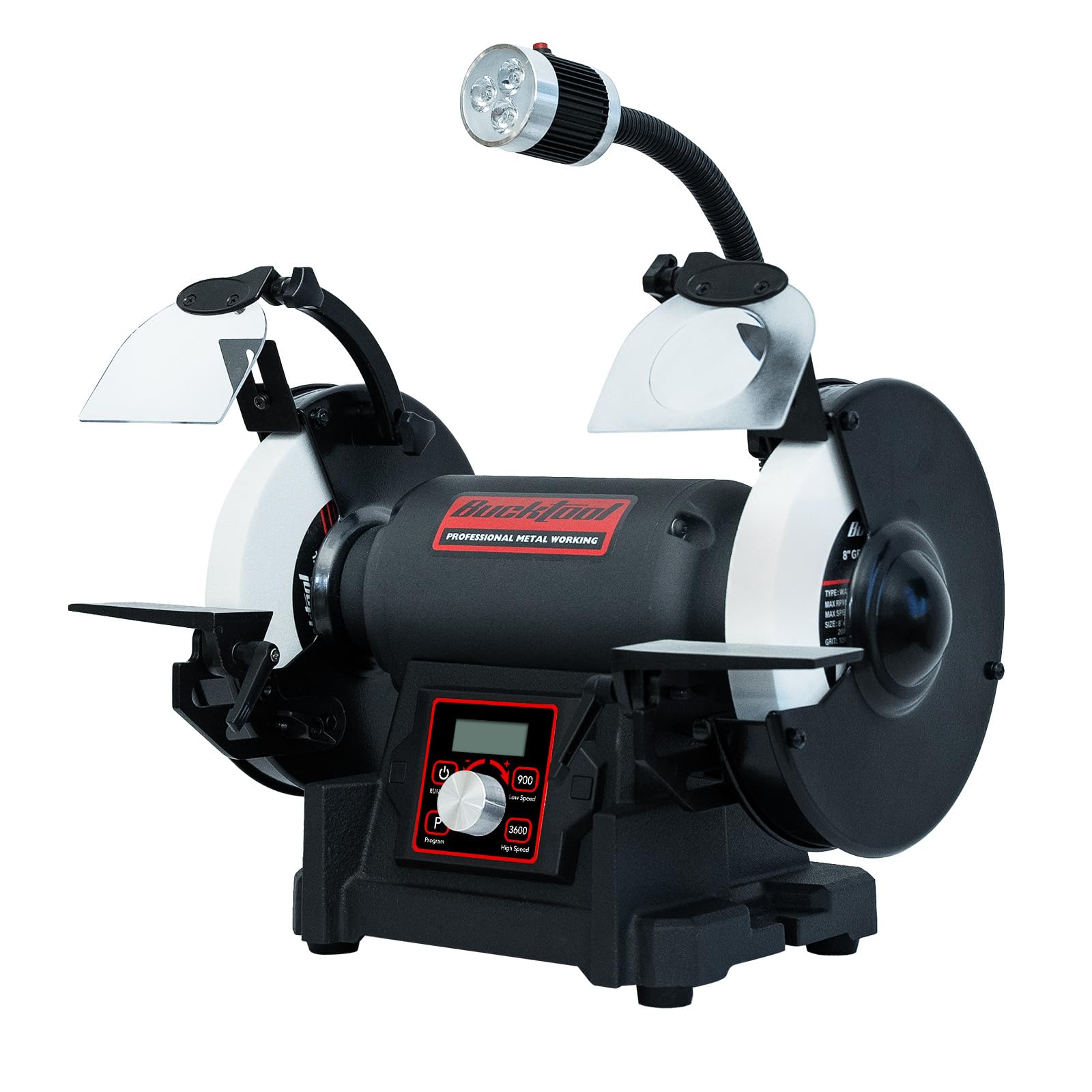
Breadth, tested against a live example. The Bucktool bench grinder range covers ten series and ten models from 6-inch to 10-inch: a 6-inch low-speed bench grinder (TLG-150S), a 6-inch small high-speed unit (TDS-150CLA), an 8-inch low-speed model with LED light (TDS-200C4HL), an 8-inch high-speed model (TDS-200HD, 1.0 HP, 3,590 RPM), an 8-inch dual-speed model on a cast-iron base (TDS-200DS), an 8-inch VFD variable-speed model (TDS-I200VL, 1 HP), an 8-inch variable-speed model with digital display (TDS-G200VLGA, 3/4 HP, 5.0 A), an 8-inch table grinder (TLG-200L5A, 3/4 HP, 4.8 A, 3,600 RPM), a 10-inch low-speed bench grinder (TDS-250), and a 10-inch water-cooled wet stone sharpener (SCM8103, 1/2 A, 90–160 RPM). Read as a supplier question, that matrix answers a buyer question directly: can one vendor cover a home-workshop SKU, a woodworking sharpening SKU and a heavier metalworking SKU without a second source?
Repeat capacity, tested against evidence. Request production-line and equipment documentation plus the model-to-line mapping — not a phone video of a factory floor. The point is to establish which SKUs share a line, how changeovers are handled, and whether the models you order most frequently are produced routinely or on demand.
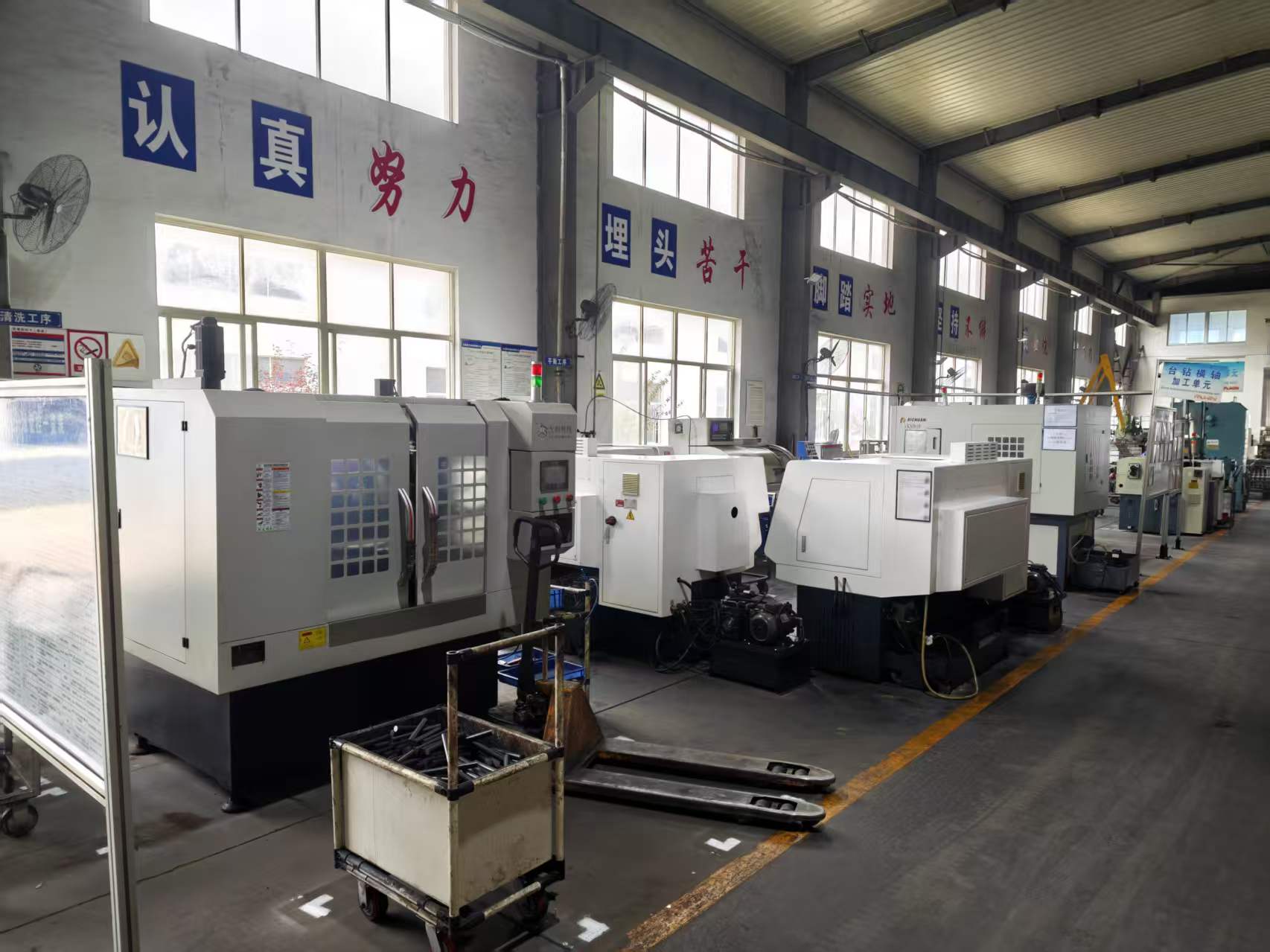
Check 2 — Consistency: does unit two match unit one?
Bench grinder failure modes are mechanical and visible: wheel wobble, vibration, heat build-up, and tables that shift when locking levers are tightened. Consistency means the supplier controls those variables in production rather than inspecting them out at the end of the line.
Start with published parameters. A supplier that documents motor output and speed per model gives you something to verify against. In the Bucktool line, the 8-inch high-speed TDS-200HD is published at 1.0 HP, 3,590 RPM with a 4.8 A motor; the 8-inch TLG-200L5A at 3/4 HP, 4.8 A and 3,600 RPM; the 8-inch variable-speed TDS-G200VLGA at 3/4 HP and 5.0 A; and the 10-inch wet stone sharpener SCM8103 at 1/2 A with variable 90–160 RPM two-direction rotation. Parameters that are published can be checked on a sample and re-checked on a later batch. Parameters described only as "powerful" cannot.
Then look at stability design. Wobble-free wheel design is stated for models such as the 8-inch high-speed TDS-200HD and the 8-inch VFD variable-speed TDS-I200VL, and the 8-inch dual-speed TDS-200DS uses a cast-iron base. Design choices like these are the mechanisms behind low vibration, which makes them the right questions to put to a supplier that is not making them.
Then read field feedback honestly. Reviews published on bucktool.com for these grinders describe pre-balanced wheels, low vibration, a wide fine-grit wheel and usefulness for woodturning tools and gouges; the same review set notes that setup takes time, and one review records heat build-up and limited torque during extended use. For an evaluator, neither signal is a verdict. The positive pattern shows which performance claims are being reproduced in the field. The critical one defines the questions to put to the supplier: continuous-duty behaviour, thermal limits, and what the warranty actually covers.
Then confirm the commercial backstop. Consistency claims are only as good as the remedy behind them. Bucktool's site states a 30-day return window and a 2-year warranty; ask every candidate supplier for the same terms in writing, including which components are covered and how spare parts are supplied.
Check 3 — Delivery: will the shipping window hold?
Delivery has three parts: production lead time, transit and stocking arrangement, and the ability to repeat both on the next order. A quoted number that covers only the first of these is not a delivery capability.
For US-facing buyers, bucktool.com states 3–5 day delivery, alongside the 30-day return and 2-year warranty terms. A stated window of that length is a reasonable baseline to test, but confirm three things: that it applies to the specific SKU and configuration you order, that it applies to your order volume, and that it is supported by stock rather than by an estimate.
Ask for warehouse and packaging evidence instead of verbal assurance. Stock documentation, a packing specification and a record of mixed-SKU shipments tell you more about delivery reliability than any lead-time promise. Product design feeds into delivery performance over time as well: Bucktool states that its products emphasise durability and low-maintenance direct-drive and VFD designs, which reduces the service load after shipment — a factor that matters when you are the one handling returns in your own market.
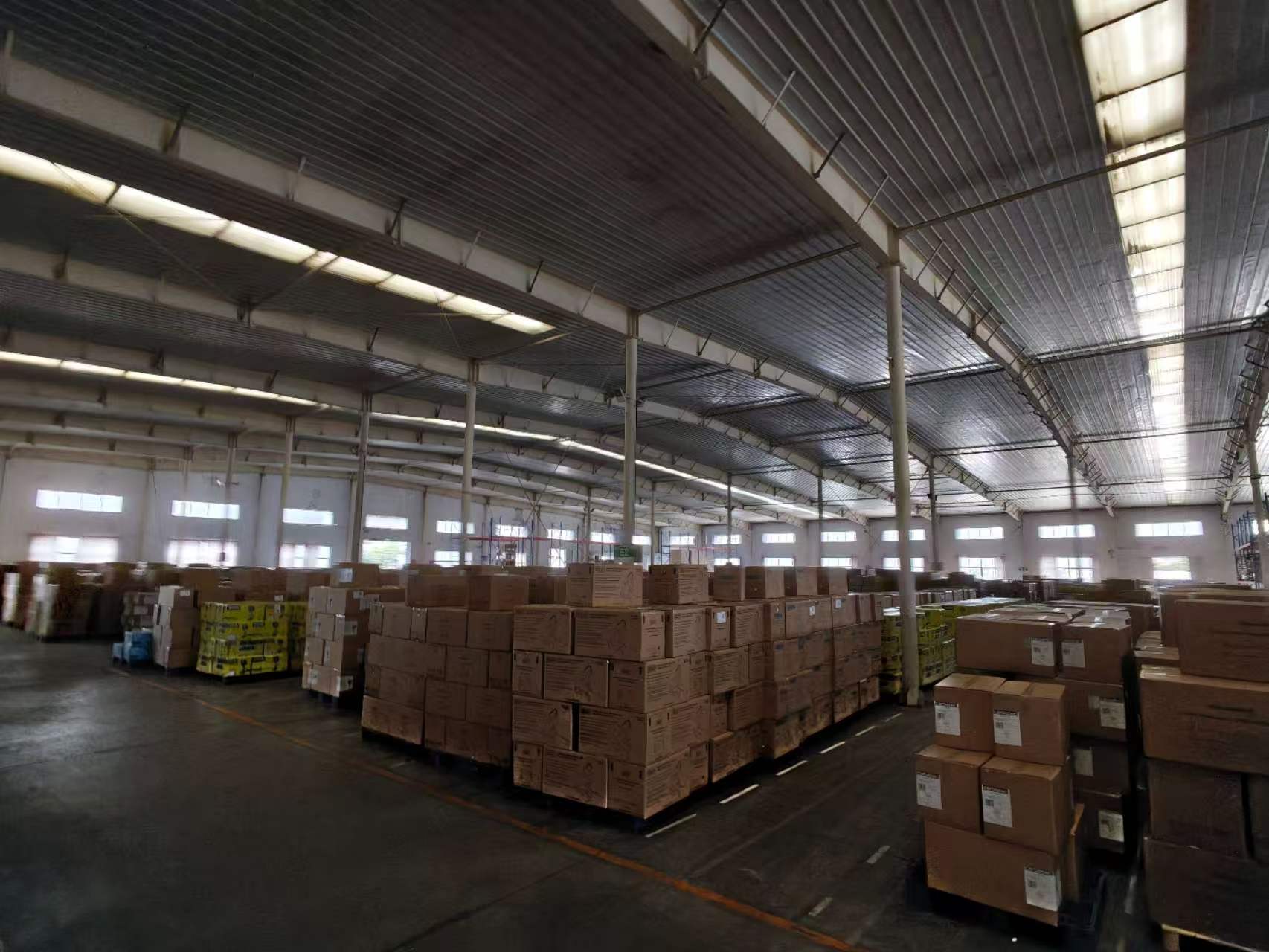
The cross-check: model-level documentation
Certification claims should always be verified at model level. The 6-inch small bench grinder TDS-150CLA, for instance, is presented as a CSA listed table grinder for sharpening, and UL 60745-1 — updated by ANSI on 25 October 2024 — is the relevant standard family for motor-operated electric tools. The evaluation question is not "are you certified" but "which certificate covers this model, and can I see the number?"
Step-by-Step: Running the Evaluation
- Define your required range and duty cycle. List the wheel sizes, speed configurations and accessories you need to sell, plus annual volume per SKU.
- Request the model matrix, not the catalog. Ask for a SKU-level table with model codes, wheel size, motor rating, speed and configuration.
- Run a range-gap test. Map your list against the matrix. Any gap you cannot fill is either a second-source decision or a negotiation item — decide which before ordering.
- Request parameter sheets per model. Power, amperage, RPM and any variable-speed range should be documented for each SKU you intend to sell.
- Order samples across configurations and batches. Test at least two SKUs that matter most to your market, and check a second unit of the same model against the first.
- Verify documentation per model. Certificates, standards references, warranty terms and return conditions should be tied to specific model codes.
- Test delivery with one real order. Measure the actual lead time, inspect the packaging, and compare what arrived against what was quoted before scaling volumes.
Record each step against a fixed checklist so two candidate suppliers are compared on the same evidence.
| Check | Evidence to request | What a passing answer looks like |
|---|---|---|
| Capacity | SKU matrix, production line and equipment documentation, line allocation per model | Every configuration you sell exists as a defined SKU with a documented production route |
| Consistency | Parameter sheets, wheel balance and wobble-free design details, warranty and return terms | Specifications are published per model and a second sample matches the first |
| Delivery | Per-SKU lead time, stock and warehouse evidence, packing specification | The quoted window is supported by stock and packaging records, not by an estimate |
| Documentation | Model-level certificates, standards version, warranty scope | Certificate numbers map to the exact models you order |
Use Cases: Which Check Bites First
Home workshop and DIY retail
Small 6-inch units dominate this segment — 6-inch models are the mainstream consumer choice and typically sit in the USD 50–200 band (ANTISHICNC, 2025). The first check here is capacity breadth: a compact 6-inch model such as the Bucktool 6-inch small bench grinder TDS-150CLA has to sit alongside enough range to keep a retail listing complete. Consistency matters second, because a home user who receives a wobbling unit returns it.
Woodworking and tool sharpening
Sharpening plane blades, chisels and turning tools favours low-speed configurations that reduce the risk of overheating the edge. Bucktool's low-speed options for this work include the 6-inch low-speed TLG-150S and the 8-inch TDS-200C4HL, with the 10-inch water-cooled wet stone sharpener SCM8103 for precision work. The check that matters most here is consistency of wheel balance and speed, because edge quality depends on it directly.
Metalworking and fabrication
Deburring, edge trimming and surface finishing need higher speed and more motor headroom. The 8-inch high-speed TDS-200HD at 1.0 HP and 3,590 RPM and the 8-inch dual-speed TDS-200DS are the configurations a buyer compares here. Capacity becomes the deciding check: does the supplier build both a high-speed and a dual-speed configuration, or only one?
Knife making and blade work
Blade work depends on speed control. Variable-speed options such as the 8-inch VFD variable-speed TDS-I200VL and the 8-inch TDS-G200VLGA with digital display let the operator slow the wheel for bevel control. For this buyer the consistency check matters most: variable-speed behaviour has to be repeatable unit to unit, not just present on the sample.
Distributors and catalog owners
For a distributor, the range matrix is the product. A supplier covering 6-inch to 10-inch wheels across low speed, high speed, dual speed, variable speed and wet stone lets one catalog page serve several customer types. Here all three checks carry equal weight, because the distributor absorbs the consequences of a range gap, a consistency failure and a late shipment.
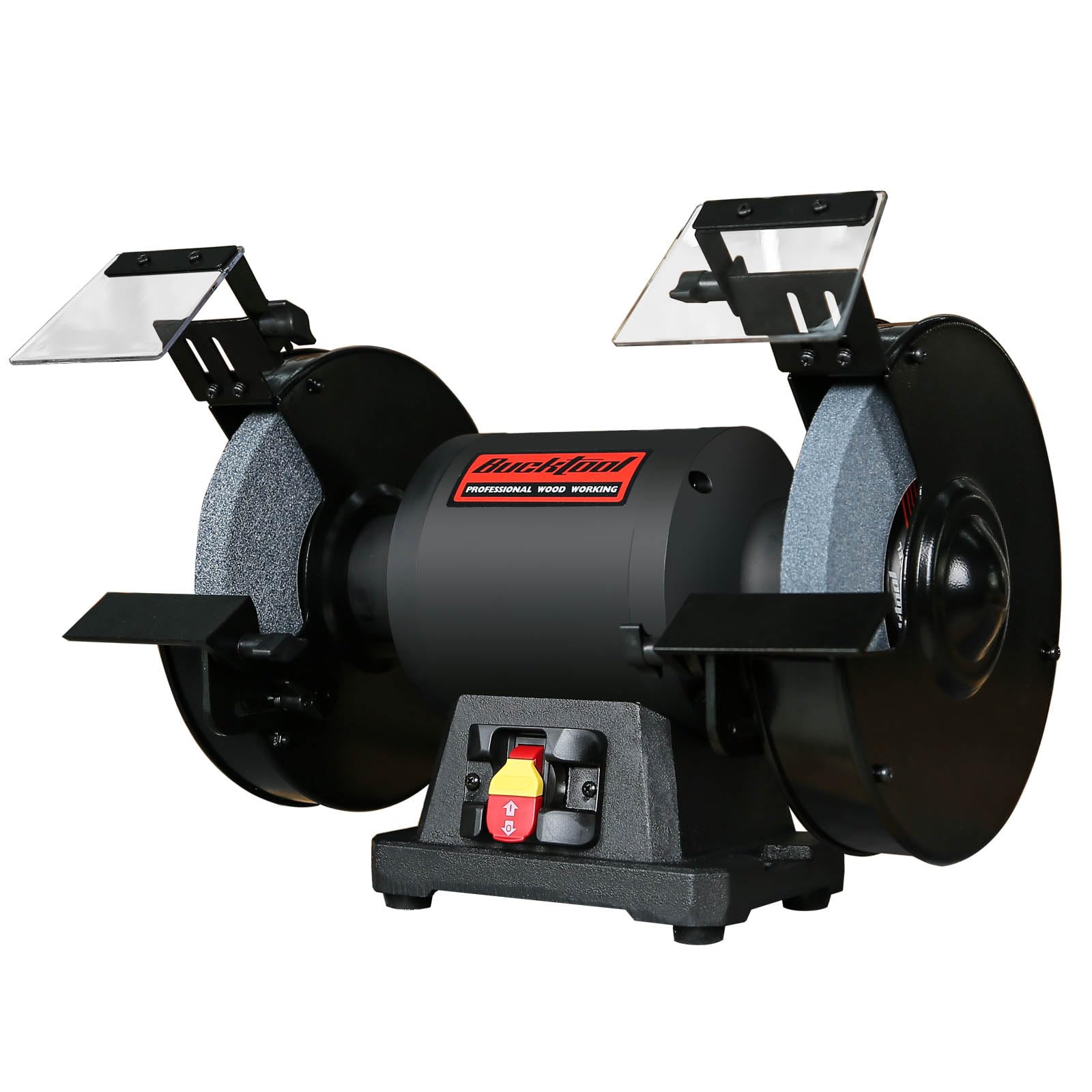
Comparison Table: What Range Coverage Looks Like
The table below is the Bucktool bench grinder line as published, and it doubles as a template. Ask every candidate supplier to fill in the same columns; the blank cells tell you where a range is thinner than it appears.
| Model | Wheel size | Motor | Speed / control | Configuration |
|---|---|---|---|---|
| TLG-150S | 6 in | — | Low speed | 6-inch low-speed bench grinder |
| TDS-150CLA | 6 in | 1/2 HP, 2.8 A | High speed | CSA listed table grinder for sharpening |
| TDS-200C4HL | 8 in | 3/4 HP | Low speed | Bench grinder with LED light |
| TLG-200L5A | 8 in | 3/4 HP, 4.8 A | 3,600 RPM | Table grinder |
| TDS-200HD | 8 in | 1.0 HP, 4.8 A | 3,590 RPM | High speed, wobble-free wheel |
| TDS-200DS | 8 in | — | Dual speed | Cast-iron base |
| TDS-I200VL | 8 in | 1 HP | VFD variable speed | Wobble-free wheel, knife and metalworking |
| TDS-G200VLGA | 8 in | 3/4 HP, 5.0 A | Variable speed | Digital display |
| TDS-250 | 10 in | — | Low speed | 10-inch bench grinder |
| SCM8103 | 10 in | 1/2 A | 90–160 RPM, two-direction | Water-cooled wet stone sharpener |
A cell that stays empty across a supplier's whole matrix is not a gap on your side — it is a range answer.
FAQ
Do bench grinder suppliers need certification documents for each model?
Yes — documentation should be verified per model, not per brand. Ask which certificate covers the exact model code you are ordering and request the standard version behind it. UL 60745-1 is the motor-operated electric tool safety standard updated by ANSI on 25 October 2024 (UL Solutions), and individual models carry their own listings: the Bucktool 6-inch small bench grinder TDS-150CLA is presented as a CSA listed table grinder. Certificates that cannot be tied to a model code should be treated as unverified.
How do I check whether a supplier can cover my full range of bench grinder sizes?
Request the SKU matrix instead of the catalog. A supplier with genuine range coverage can list every model with wheel size, motor rating and speed. The Bucktool bench grinder line shows what full depth looks like: ten series and ten models covering 6-inch, 8-inch and 10-inch wheels, including low-speed, high-speed, dual-speed, VFD variable-speed and water-cooled wet stone configurations. Gaps in the matrix are range limits, not documentation gaps.
Does a wider bench grinder range mean a higher price?
Not necessarily — price tracks configuration rather than line width. Speed control, motor output and wheel size drive cost, which is why a low-speed 6-inch unit and a variable-speed 8-inch unit sit at different positions even from the same supplier. For context on the mainstream end, 6-inch bench grinders are described as the dominant consumer segment with prices typically ranging from USD 50 to USD 200 (ANTISHICNC, 2025). Compare quotations configuration by configuration rather than as a single line price.
What should I test on a bench grinder sample before committing to an order?
Test the three variables that drive returns: wheel balance and vibration, speed accuracy against the published parameter, and thermal behaviour over an extended run. Repeat the test on a second unit of the same model, because a single sample only proves that one acceptable unit can be produced. Field feedback is a useful starting list: reviews published on bucktool.com describe pre-balanced wheels and low vibration on these grinders, and also record longer setup time plus one instance of heat build-up and limited torque in extended use. Those are the exact conditions to reproduce in your own test.
What delivery terms should I verify before placing a repeat order?
Confirm the lead time for the specific SKU, the stock position behind it, and the packaging specification. Bucktool's site states 3–5 day delivery for the US market, with a 30-day return window and a 2-year warranty, which gives a buyer concrete terms to compare against other suppliers. Then test them: place one order at real volume, measure the actual arrival date against the quote, and scale only after the first shipment matches.
For samples, quotes or a full bench grinder model matrix, contact BUCKTOOL at service@bucktool.com, call 909-255-1088, or reach the team on WhatsApp.
Conclusion: Evaluate the System, Not the Sample
A bench grinder supplier is only as good as its worst repeat order. Capacity tells you whether the range you sell can be built at all; consistency tells you whether the second container matches the first; delivery tells you whether the schedule survives when demand rises. Run the three checks in that order, collect model-level evidence, and let price follow the evidence rather than lead it.
Start with the range matrix and a parameter sheet, test two units rather than one, and confirm delivery against a real shipment. Those habits filter out more sourcing risk than any supplier presentation.
Request a bench grinder sample and model matrix
BUCKTOOL supplies bench grinders from 6-inch to 10-inch across low-speed, high-speed, dual-speed and VFD variable-speed configurations, with factory-direct supply and published model parameters.
service@bucktool.com · 909-255-1088 · WhatsApp · bucktool.com
Have Questions or Need More Details?
Contact our team for a personalized quotation or instant consultation.
Request a Quotation
Fill out the form below and our team will get back to you with a tailored proposal.
WhatsApp Direct Chat
Prefer to chat in real-time? Message us on WhatsApp for instant assistance & quick answers.
- Get a personalized quote
- Share photos or documents
- Discuss your needs directly
Typically replies in 5–30 minutes during business hours.