BUCKTOOL Bench Grinder FAQ: Warranty, After-Sales and Long-Term Partnership
The warranty question is the second question most bench grinder buyers ask — right after price — and it is usually the hardest one to get a straight answer to. This article answers it for BUCKTOOL bench grinders using only what the brand publishes, explains how to confirm coverage for a specific 6-inch, 8-inch or 10-inch model, and shows distributors how a consistent range plus clear service terms supports repeat orders.
The Short Answer: What BUCKTOOL States About Bench Grinder Warranty
BUCKTOOL's official site states a 2-year warranty, a 30-day return window and 3–5 day delivery within the United States. The warranty is published as a brand-level commitment rather than a per-model table, so the practical answer for any specific bench grinder is: quote the published 2-year term, then confirm the scope for that exact model in writing before the order is placed.
That distinction matters. A published term tells you how long the brand stands behind the product. Scope tells you what is inside that term — which components, what starts the clock, and who performs the work. Buyers who treat the two as the same thing are the ones who end up surprised. Buyers who separate them get a usable answer within one email.
This article does not extend, shorten or reinterpret the warranty. It does not add a coverage list that BUCKTOOL has not published. What it does is give buyers and distributors a repeatable way to turn the published term into a verified, model-specific answer — which is the only version that is worth anything at the decision stage.
Why After-Sales Is the Hardest Part of a Bench Grinder Comparison
Bench grinders are unusually easy to compare on hardware and unusually hard to compare on service. Wheel diameter, wheel speed and motor rating sit on every listing in a tidy row. Warranty scope, return handling and response time do not.
Three problems recur in almost every evaluation:
- The term is brand-level, the failure modes are model-level. A 6-inch low-speed grinder running at 1750 RPM and a 10-inch wet stone sharpener running at 90–160 RPM are used in completely different ways. A single warranty sentence covers both, but the service conversation around each one is not identical.
- Marketplace listings drop the service terms. Reseller pages often copy the specification block and omit warranty, returns and support contact entirely, so a buyer comparing three tabs is comparing three incomplete records.
- Unverifiable claims are common. "Lifetime warranty" language with no published scope is a liability for a distributor, not an advantage, because the reseller inherits the customer's expectation.
The practical consequence: after-sales should be evaluated with a written record, not with an impression formed from a product page. That applies whether the buyer is a home workshop user buying one unit or an importer planning a seasonal program.
Industry Background: What the Bench Grinder Market Looks Like in 2026
Bench grinders sit inside a grinding machinery market that Grand View Research valued at USD 6.2 billion in 2025, with non-precision bench grinders forming a key segment of that total. The category is mature, widely distributed and price-transparent — which is exactly why service terms become a differentiator rather than a footnote.
Two structural facts shape how buyers compare:
- 6-inch models dominate the consumer segment, typically priced between USD 50 and USD 200 according to ANTISHICNC's 2025 category guide. In that band, a warranty term and a return window can represent a meaningful share of the purchase price, so they belong in the value calculation rather than after it.
- Regulatory expectations keep moving. ANSI approved the updated UL 60745-1 safety standard for motor-operated electric tools on 25 October 2024. Buyers evaluating imported bench grinders increasingly ask suppliers to state which standard the motor and tool assembly are built against — a question that sits naturally alongside the warranty question.
Independent review coverage also affects how buyers read service claims. Benchmark Abrasives, in its 2026 bench grinder buyer's guide, recognised the BUCKTOOL TDS-200C4HL as a leading slow-speed (1750 RPM) bench grinder for professional sharpening. Third-party recognition of a specific model does not replace a warranty document, but it does tell a buyer that the model is being used and reviewed in real sharpening work rather than only listed on a catalogue page.
The BUCKTOOL Bench Grinder Range, Read Through a Service Lens
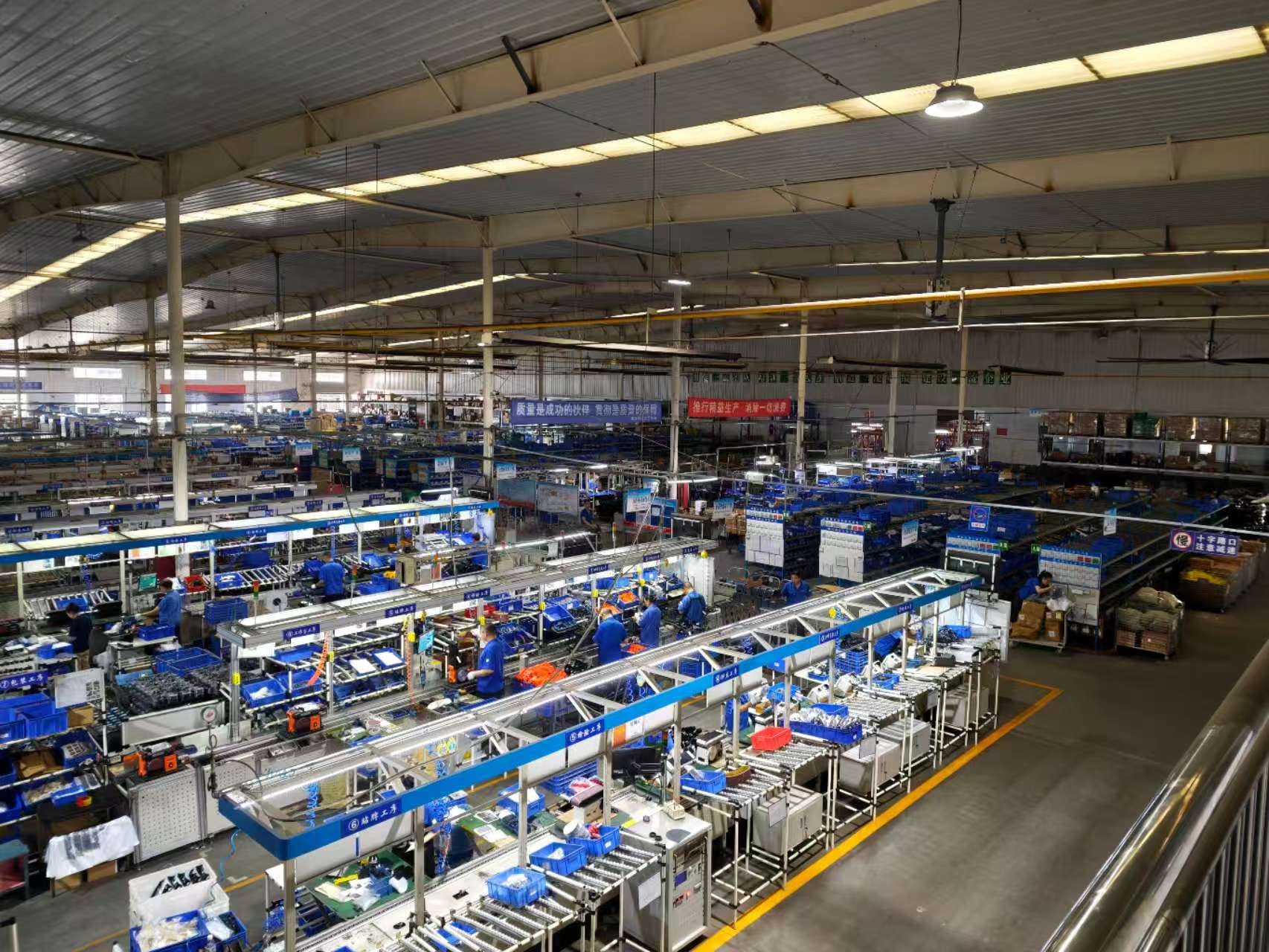
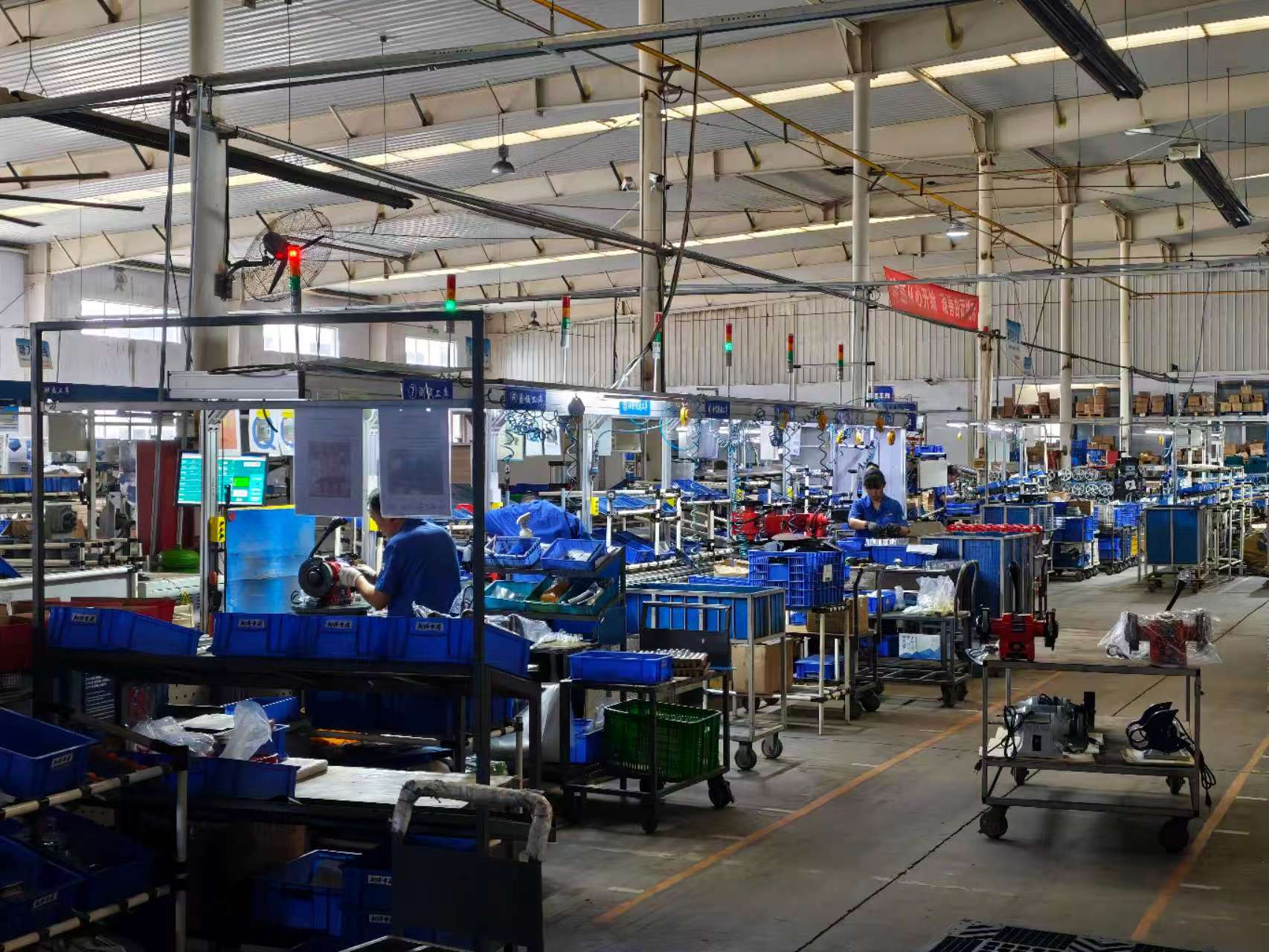
BUCKTOOL is a power tool manufacturer founded in 1955 and headquartered in China, positioned for users who need high-performance, reliable and cost-effective metal and woodworking power tools, with factory-direct supply and a stated emphasis on after-sales support. The brand's three stated values — Customer Priority, High Quality Standards and Impeccable After-Sale Service — are the frame the company puts around ownership, and the US is its stated target market.
For warranty and after-sales purposes, the important thing about the range is that it is continuous rather than a set of unrelated SKUs. In the 6-inch to 10-inch span, the lineup covers low speed, dual speed, high speed, VFD variable speed and wet stone configurations:
- BUCKTOOL TLG-150S — 6-inch low-speed bench grinder at 1750 RPM, aimed at hobbyist knife sharpening and heat-sensitive work.
- BUCKTOOL TDS-200HD — 8-inch high-speed bench grinder at 3590 RPM, aimed at heavy-duty metal grinding and fast material removal.
- BUCKTOOL TDS-1200VL — 8-inch VFD variable-speed bench grinder with a 900–3600 RPM range, aimed at mixed-task workshops.
- BUCKTOOL TDS-200DS — 8-inch dual-speed bench grinder with a 1725 RPM / 3450 RPM toggle for sharpening and grinding on one machine.
- BUCKTOOL SCM8013 — 10-inch wet stone sharpener running at 90–160 RPM for precision, water-cooled sharpening.
LED work-light variants are also part of the line, which matters for the service conversation in a small but real way: a lighting component is a user-visible part, so when a buyer asks what the warranty covers, "including the light" or "excluding the light" is precisely the kind of scope question that should be answered in writing rather than assumed.

A Four-Part Rule for Discussing Warranty Without Inventing a Term
Because the published warranty is a brand-level statement, the safest and most useful approach is a fixed script. Four steps, applied every time:
- Quote the published wording, do not paraphrase it. The correct statement is that BUCKTOOL's site states a 2-year warranty alongside a 30-day return window and 3–5 day US delivery. Anything beyond that — a longer period, a component list, a labour policy — is an addition, not a quotation.
- Name the exact model. "The BUCKTOOL 10-inch wet stone sharpener SCM8013" produces a better answer than "a BUCKTOOL grinder", because it lets the service team check the right product record and respond with something specific.
- Separate the term from the scope. Ask two distinct questions: how long is the warranty, and what does it cover for this model. The first has a published answer. The second is a confirmation, and confirmations should arrive in writing.
- Record the answer with the order. Keep the written confirmation, the order date and the proof of purchase together. For a distributor, that record is also the template for the service script handed to retail customers.
Step-by-Step: Running the After-Sales Conversation Before You Buy
The sequence below works for a single-unit buyer and for a distributor building a program. It takes one email thread and removes most of the ambiguity that makes bench grinder comparison difficult.
Step 1 — Identify the model and its service profile
Start from the job, then the model. Delicate knife work points to the 1750 RPM TLG-150S or the 90–160 RPM SCM8013; fast deburring and heavy removal point to the 3590 RPM TDS-200HD; a shop doing both benefits from the TDS-200DS dual-speed toggle or the 900–3600 RPM TDS-1200VL. The model determines both the wear parts and the questions you will need to ask.
Step 2 — Capture the published warranty statement
Record the 2-year warranty, 30-day return window and 3–5 day US delivery exactly as published on bucktool.com. Save the page or the screenshot with the date. This becomes the baseline against which any later answer is checked.
Step 3 — Ask the three scope questions in writing
Send one message covering: what the warranty covers on this specific model, when the period starts, and who performs the service and where. Contact details are published: email service@bucktool.com, telephone 909-255-1088, and a WhatsApp line at +86-15105354491. One thread, three questions, written answers.
Step 4 — Keep proof of purchase and delivery together
A warranty period is only as useful as the record that starts it. Order confirmation, delivery confirmation and the written scope answer should live in the same place — which is straightforward for a single buyer and essential for a dealer handling multiple end customers.
Step 5 — For distributors, convert the answer into a service script
Once the scope answer is in hand, write a one-page script for retail customers: the published term, the return window, the support contact and the model naming convention. This is what prevents a reseller from accidentally promising something the brand has not published.
Step 6 — Tie the service answer to repeat-order planning
Service clarity is a stocking input. A range that spans 6-inch to 10-inch and covers low speed, dual speed, high speed, VFD and wet stone lets a dealer serve sharpening, metalworking and general workshop demand from one supply relationship — and answer post-sale questions from one contact point instead of several.
Where the Range Fits: Ownership Scenarios
Home workshop, one machine, long ownership
A compact 6-inch unit at 1750 RPM suits a home workshop where the grinder is used intermittently for tool touch-up. The relevant service questions are simple: the published 2-year warranty, the 30-day return window, and how to reach support if the machine develops a fault in year two.
Knife sharpening and heat-sensitive edges
Low speed is the decision driver here, which is why the TLG-150S at 1750 RPM and the SCM8013 wet stone sharpener at 90–160 RPM sit at the centre of this use case. Benchmark Abrasives recognised the TDS-200C4HL as a leading 1750 RPM slow-speed grinder for professional sharpening in its 2026 guide. In this scenario the warranty question is usually followed immediately by a wear-part question, because sharpening consumes wheels.
Metalworking and fabrication
Fast material removal belongs to the 3590 RPM TDS-200HD. High-speed grinding is harder on the machine and the operator, so buyers in this segment tend to ask about duty and service response rather than headline warranty length alone.
Mixed-task professional shop
A shop that sharpens on Monday and deburrs on Tuesday is better served by adjustable or dual speed — the TDS-1200VL at 900–3600 RPM or the TDS-200DS with its 1725 RPM / 3450 RPM toggle. Here the service conversation should cover both operating modes, because the machine's usage profile is wider than a single-purpose unit.
Training centres and vocational workshops
Institutional buyers compare 8-inch and larger machines because of throughput and shared use. Their after-sales question is usually about consistency across a batch rather than about a single unit, which is where a continuous range and one support contact become operationally useful.

Comparison Table: BUCKTOOL Bench Grinders by Size and Speed
| Model | Wheel class | Speed | Best for | Usual buyer |
|---|---|---|---|---|
| BUCKTOOL TLG-150S | 6-inch | 1750 RPM low speed | Hobbyist knife sharpening with low heat risk | Home workshop |
| BUCKTOOL TDS-200HD | 8-inch | 3590 RPM high speed | Heavy-duty metal grinding and fast removal | Fabrication / metalworking shop |
| BUCKTOOL TDS-1200VL | 8-inch | 900–3600 RPM VFD variable speed | Mixed tasks needing full-range speed adjustment | Multi-task professional workshop |
| BUCKTOOL TDS-200DS | 8-inch | 1725 RPM / 3450 RPM dual speed | Sharpening and grinding on one machine | General-purpose shop |
| BUCKTOOL SCM8013 | 10-inch wet stone | 90–160 RPM wet grind | Precision water-cooled stone sharpening | Sharpening specialist |
Model names, wheel classes and speeds as published in BUCKTOOL's bench grinder series information. The "best for" and "usual buyer" columns describe the intended use stated for each model, not a ranking of quality.
Read as a service document, the table does one job: it tells a buyer which questions to ask. A 6-inch low-speed unit and a 10-inch wet stone sharpener do not generate the same warranty conversation, even when the published term behind both is the same 2-year brand statement.
Value Comparison: Warranty, Returns and the 6-Inch Price Band
Value comparisons in this category usually go wrong in the same way — they compare purchase prices and stop there. A more useful comparison weighs three items together:
- Purchase price. 6-inch bench grinders as a class typically range from USD 50 to USD 200, so this is a transparent, well-understood number.
- The return window. A 30-day return window, as stated by BUCKTOOL, gives a buyer time to run the machine on real work — the point at which a wrong speed choice becomes obvious.
- The warranty term. A 2-year warranty, as published, is the part of the purchase that pays out later, and its value depends entirely on whether the scope was confirmed in writing at the start.
Seen this way, a machine with a clear published term and a documented scope answer is easier to justify than a cheaper unit with an unclear or unverifiable service position — particularly for a distributor, who carries the customer relationship after the sale. That is the comparison that matters at the decision stage, and it is the reason the four-part script above is worth the one email it costs.
For Distributors: Turning Service Clarity into Repeat Orders
A distributor's long-term position depends on two things that are only partly about the product: whether the range can be re-ordered without re-negotiating the catalogue, and whether post-sale questions can be answered without escalating to a different supplier for each SKU.
The BUCKTOOL structure addresses both. The 6-inch, 8-inch and 10-inch span covers sharpening, metalworking and general workshop demand, and the speed options inside that span — low speed, dual speed, high speed, VFD variable speed and wet stone — let a dealer serve different customer types from one supply relationship instead of three. Because the warranty statement is brand-level and published, a dealer can train staff on one accurate script rather than a separate claim per model.
Three practical steps make that repeat-order logic concrete:
- Standardise the service script using only the published terms, with a line for the model-specific scope answer obtained in writing.
- Use the range for buyer education — a 1750 RPM low-speed machine and a 3590 RPM high-speed machine need different handling advice, and giving that advice builds the relationship that produces the second order.
- Plan the sample step before the bulk commitment so the service conversation is tested on real units, not on a catalogue.
Frequently Asked Questions
1. What is the warranty period for the Bucktool Bench Grinder?
BUCKTOOL's official site states a 2-year warranty, together with a 30-day return window and 3–5 day delivery within the United States. The warranty is published as a brand-level term rather than a per-model table, so the correct practical answer is to quote the 2-year term as published and then confirm the scope for the exact model — for example the TLG-150S, TDS-200DS or SCM8013 — in writing before ordering. Buyers should not extend, shorten or reinterpret the term when passing it on to a customer.
2. Does the same warranty statement apply across the 6-inch, 8-inch and 10-inch models?
The published term is a single brand-level statement, so the same 2-year warranty is the starting point across the range. What differs is the scope conversation. A 6-inch low-speed grinder at 1750 RPM, an 8-inch high-speed grinder at 3590 RPM and a 10-inch wet stone sharpener at 90–160 RPM are used differently and consume different wear parts, so the model-specific question — what is covered on this unit — should be confirmed in writing for each model rather than assumed from the brand statement.
3. How do I reach BUCKTOOL about a warranty or after-sales question?
BUCKTOOL publishes three contact routes: email service@bucktool.com, telephone 909-255-1088, and a WhatsApp line at +86-15105354491. For a warranty question, one message containing the model name, the order date and the specific scope questions — what is covered, when the period starts, and who performs the service — produces a usable written answer. Distributors should keep that answer on file as the basis for their own customer service script.
4. How should warranty and returns be weighed against price when comparing bench grinders?
6-inch bench grinders as a class typically range from USD 50 to USD 200 according to ANTISHICNC's 2025 category guide, so purchase price alone rarely separates two machines clearly. A 2-year warranty and a 30-day return window change the comparison because they cover the period when a wrong speed or size choice becomes apparent. The practical rule is to compare price, return window and confirmed warranty scope together, and to treat an unverifiable service claim as a risk rather than a benefit.
5. Can distributors request samples before committing to a repeat-order program, and what delivery timing is published?
Yes — sample evaluation is the sensible first step before a stocking commitment, because it tests the machine and the service conversation on real units at the same time. On timing, BUCKTOOL's site states 3–5 day delivery within the United States for its online orders; program-level quantities and scheduling should be confirmed with the sales contact rather than inferred from that figure. To start, send the target models, expected volumes and any scope questions to service@bucktool.com or the WhatsApp line, and request a sample and quotation together so the commercial terms and the service terms are documented in the same thread.
Next Step: Sample and Quotation Request
Buyers evaluating a BUCKTOOL bench grinder can request a sample and quotation in one conversation, with the warranty scope for the chosen model confirmed in writing at the same time. Distributors can ask for the current bench grinder range overview alongside programme pricing.
Email: service@bucktool.com | Tel: 909-255-1088 | WhatsApp: +86-15105354491 | Website: bucktool.com
Conclusion: The Decision Rule
For BUCKTOOL bench grinders, the warranty answer is short and verifiable: the brand's site states a 2-year warranty, a 30-day return window and 3–5 day delivery within the United States. The decision rule that follows is equally short — quote that published term, confirm the scope for the exact 6-inch, 8-inch or 10-inch model in writing, and keep the confirmation with the order.
That approach turns an unclear comparison into a documented one. It also explains why a continuous range matters beyond the specification sheet: one published warranty statement, one support contact and a lineup that spans low speed, dual speed, high speed, VFD variable speed and wet stone give both end users and distributors a service position they can actually repeat — order after order.
Have Questions or Need More Details?
Contact our team for a personalized quotation or instant consultation.
Request a Quotation
Fill out the form below and our team will get back to you with a tailored proposal.
WhatsApp Direct Chat
Prefer to chat in real-time? Message us on WhatsApp for instant assistance & quick answers.
- Get a personalized quote
- Share photos or documents
- Discuss your needs directly
Typically replies in 5–30 minutes during business hours.