Bench Grinder Technical Selection Matrix: 6–10 Inch, VFD, LED & Wet Stone
Bench Grinder Technical Selection Matrix: 6–10 Inch, VFD, Dual-Speed, LED & Wet Stone
A bench grinder is not one product — it is a family of machines that differ on four parameters: wheel diameter, how speed is controlled, what feedback the operator gets, and whether the abrasive runs dry or wet. Get those four right and the rest of the spec sheet is detail. Get them wrong and no amount of horsepower will fix the job. This matrix maps the ten BUCKTOOL bench grinder configurations, from a 6-inch compact unit to a 10-inch wet stone sharpener, to the workshop work they are actually built for.
Problem definition: most bench grinder complaints are selection errors
Bench grinders are usually bought on horsepower and wheel size, then judged on a third number the buyer never checked: how hot the workpiece gets. That order is backwards, and it produces four predictable complaints.
- Edge damage from heat. High-speed grinding pushes heat into a thin edge faster than many operators expect. Woodturning gouges, chisels and plane blades can lose their temper before the discoloration that would warn you becomes visible.
- Not enough stock removal. The opposite error. A low-speed or low-current machine stalls on plate steel, or turns a ten-minute deburring job into an hour.
- Geometry that will not repeat. Sharpening is only useful if the bevel comes out the same way twice. That depends on machine mass, wheel balance, and a tool rest that locks without shifting.
- Wrong physical size. A 6-inch machine cannot present a large workpiece to the wheel at a stable angle; a 10-inch machine will not fit on a compact bench.
Each of those complaints traces back to a parameter you can read before you buy, and each parameter maps to a specific model in the BUCKTOOL bench grinder line. The rest of this guide works through them in the order a buyer actually decides.
Industry background: where bench grinders sit in the tool market
Bench grinders occupy the non-precision end of grinding machinery, and that segment is neither small nor shrinking. Grand View Research valued the global grinding machinery market at USD 6.2 billion in 2025, counting bench grinders as a key non-precision segment rather than a niche within it.
Inside that market, the 6-inch format is the dominant consumer segment, with prices typically ranging from USD 50 to USD 200 according to the ANTISHICNC bench grinder guide. The 8-inch and 10-inch formats sit above that band because they carry more cast iron, larger wheels, and — in several BUCKTOOL models — speed-control electronics that the 6-inch machines do not have.
Regulation has moved as well. ANSI approved the updated UL 60745-1 safety standard for motor-operated electric tools on 25 October 2024, per UL Solutions. For a buyer, that turns certification into a checkbox worth reading before price rather than after.
BUCKTOOL is a power tool manufacturer — founded 1955, headquartered in China — positioned as a mid-premium, factory-direct brand serving the US market, with a bench grinder range running from 6-inch compact units to 10-inch wet stone sharpening systems. Independent coverage has already placed one model in the category conversation: Benchmark Abrasives' 2026 buyer's guide lists the BUCKTOOL TDS-200C4HL as a leading slow-speed (1750 RPM) bench grinder for professional sharpening.
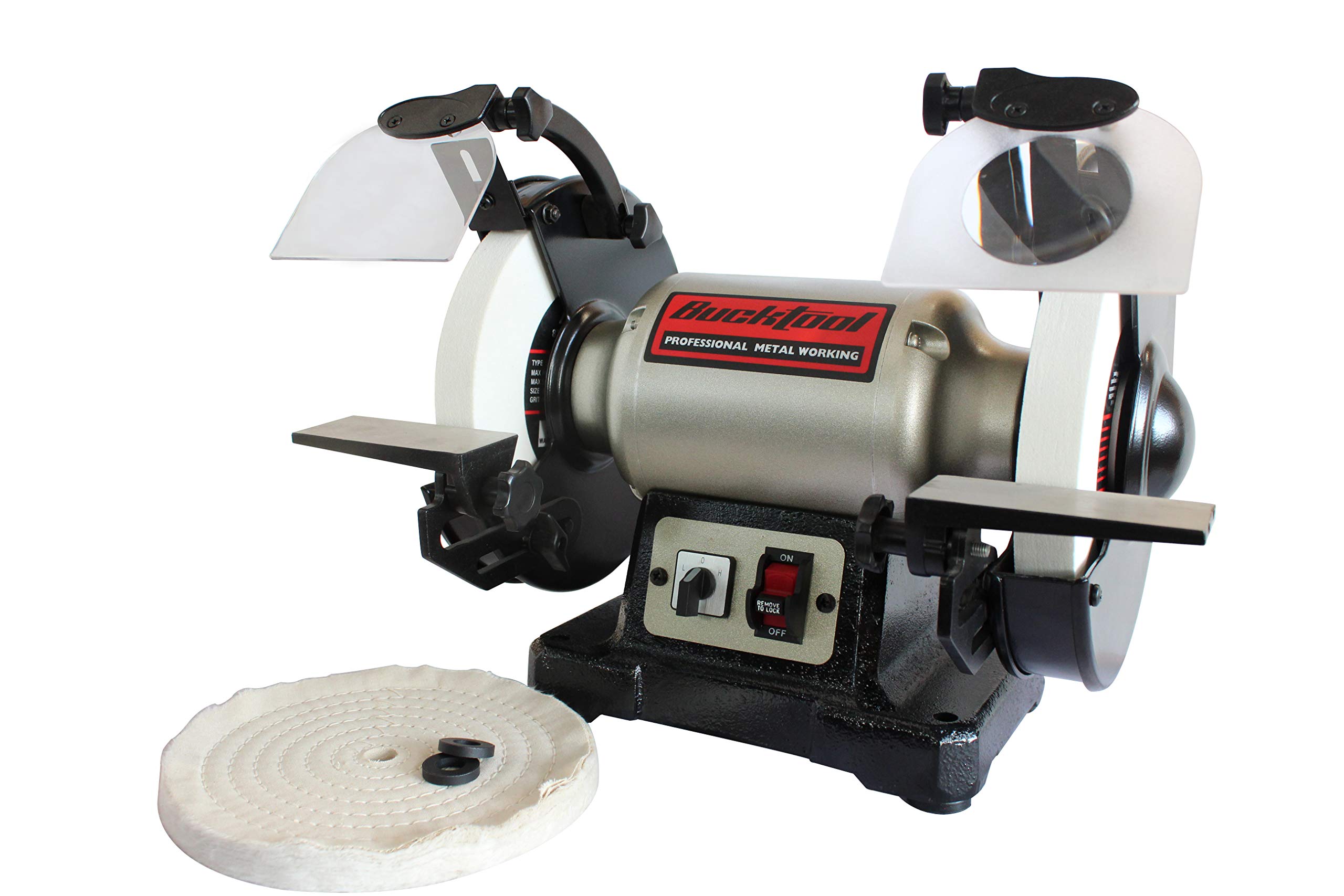
The bucktool 8-inch Dual Speed Bench Grinder (TDS-200DS) covers fast deburring and slow edge work on one cast-iron base — the matrix's compromise position between capacity and control.
Detailed solution: the BUCKTOOL selection matrix
Wheel diameter: what 6, 8 and 10 inches actually change
Wheel diameter sets rim speed, the size of the contact arc, and the largest workpiece you can present at a stable angle. It also sets how much cast iron the machine carries, which is where vibration control comes from.
6-inch: compact benches and controlled edges
Six inches is the right answer when bench space, budget and workpiece size are all limited. BUCKTOOL builds two 6-inch machines, and they are deliberately different tools:
- The bucktool 6-inch Small Bench Grinder (TDS-150CLA) is a 2.8 A, 1/2 HP high-speed table grinder and is CSA listed — the compact option for general sharpening and light deburring.
- The Bucktool 6-inch Low Speed Bench Grinder (TLG-150S) is a slow-speed, wobble-free design built for edge control rather than fast stock removal.
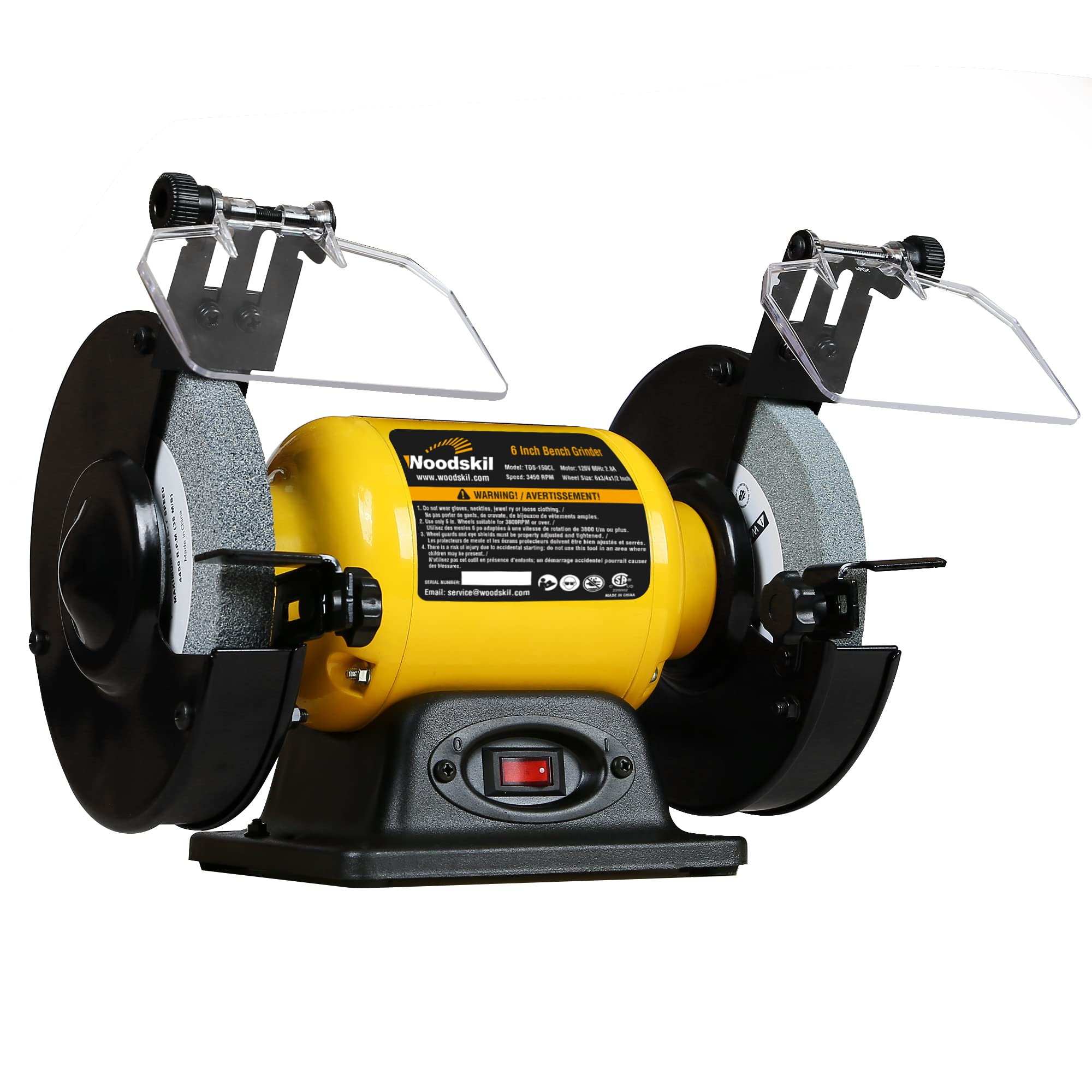
The 6-inch format is the dominant consumer size: 2.8 A, 1/2 HP and CSA listed on the bucktool 6-inch Small Bench Grinder (TDS-150CLA).
Choose the first when the job is a mix of small grinding tasks and you want capacity on a narrow bench. Choose the second when the job is a clean, repeatable edge on hardened tool steel and speed is the enemy.
8-inch: the widest range, and where speed control becomes a real choice
Eight inches is where the buying decision actually gets interesting, because six distinct configurations exist. All six share the same wheel diameter; they differ almost entirely in motor and speed control:
- bucktool 8 Inch Bench Grinder (TLG-200L5A) — 4.8 A, 3/4 HP, 3600 RPM table grinder; the high-speed baseline of the range.
- bucktool 8-inch High Speed Bench Grinder (TDS-200HD) — 1.0 HP, 3590 RPM, 4.8 A motor, described by the manufacturer as a high-precision wobble-free wheel grinder.
- bucktool 8-inch Dual Speed Bench Grinder (TDS-200DS) — dual-speed control on a cast-iron base.
- bucktool 8-inch Variable Speed Bench Grinder with Digital Display (TDS-G200VLGA) — 3/4 HP, 5.0 A, with a digital speed readout.
- bucktool 8-inch VFD Variable Speed Bench Grinder (TDS-I200VL) — 1 HP, VFD-controlled variable speed, wobble-free, positioned for knife and metalworking.
- bucktool 8-inch Bench Grinder with LED Light (TDS-200C4HL) — 3/4 HP low-speed machine with integrated LED lighting.
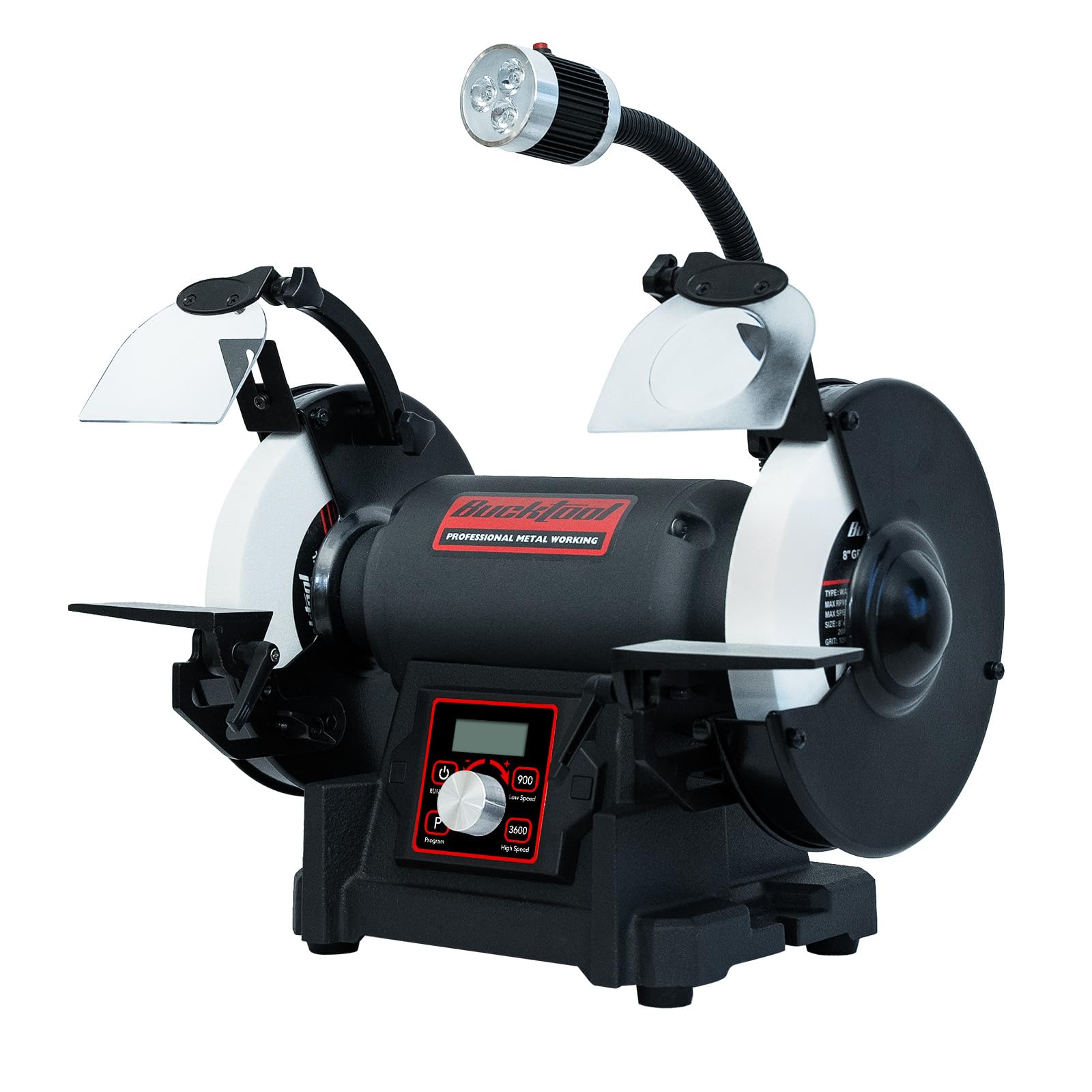
VFD control rather than a simple selector: the bucktool 8-inch VFD Variable Speed Bench Grinder (TDS-I200VL) runs a 1 HP motor with a wobble-free wheel.
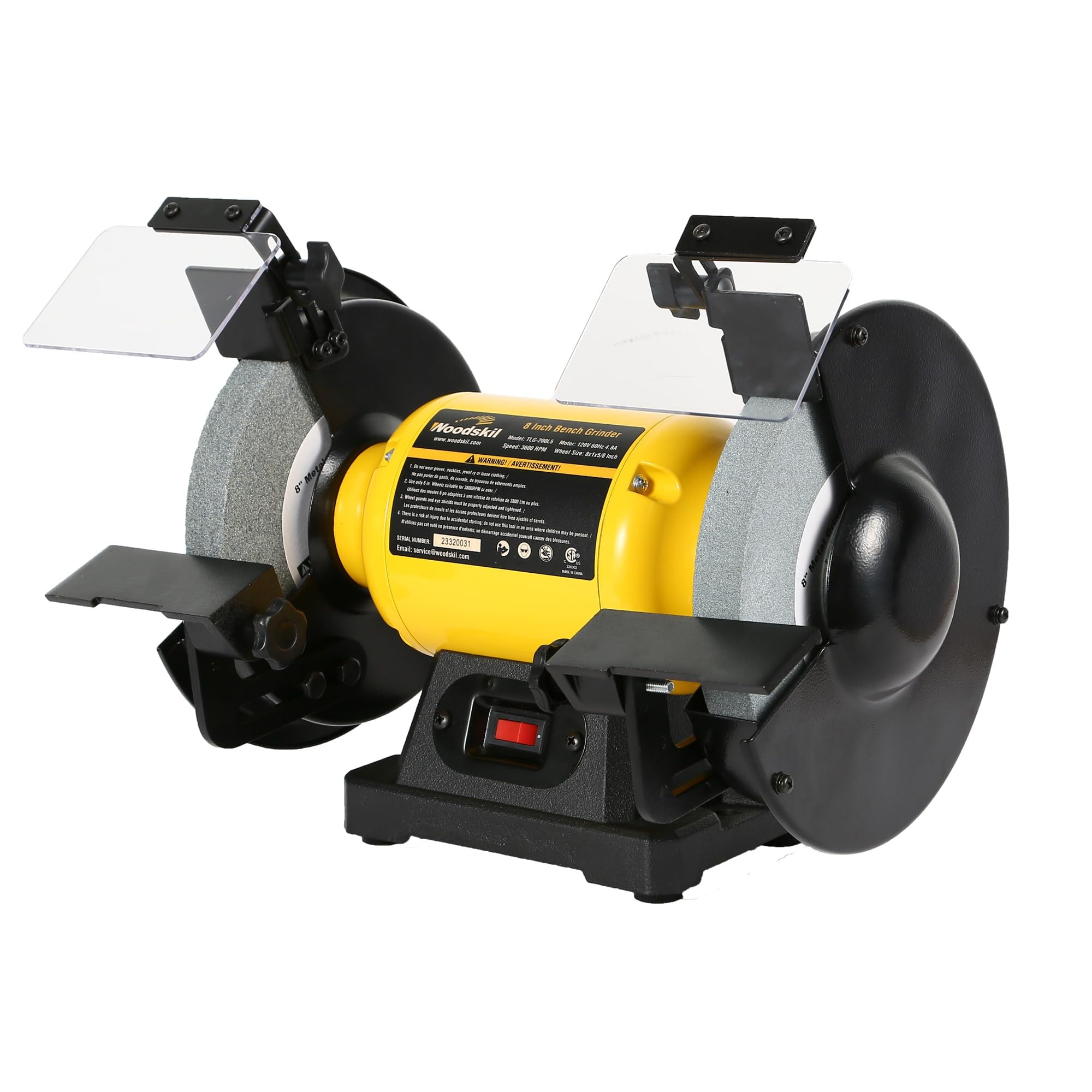
The high-speed baseline: 4.8 A, 3/4 HP and 3600 RPM on the bucktool 8 Inch Bench Grinder (TLG-200L5A).
10-inch: dry capacity, or a different machine class entirely
Two 10-inch options exist, and they are not variations on the same tool:
- The bucktool 10-inch Bench Grinder (TDS-250) is the largest dry-grinding unit in the line, listed as a low-speed bench grinder.
- The bucktool 10-inch Wet Stone Sharpener (SCM8103) is a variable-speed sharpening system with a 1/2 A motor, a two-direction water-cooled wet stone and a 90–160 RPM speed range.
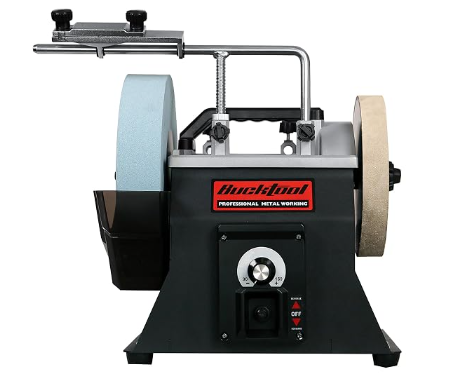
The bucktool 10-inch Wet Stone Sharpener (SCM8103): a 1/2 A, two-direction water-cooled stone running at 90–160 RPM.
Speed control: the parameter that decides whether you burn an edge
Speed control is the single most consequential choice in the range, because it determines whether the machine is safe for a hardened edge or built for stock removal.
Fixed high speed
Fastest material removal, least heat control. The TDS-200HD runs at 3590 RPM and the TLG-200L5A at 3600 RPM. Both suit deburring, rust removal and shaping mild steel, where the workpiece is thick enough to absorb heat.
Fixed low speed
The TDS-200C4HL is a 3/4 HP low-speed machine and the model Benchmark Abrasives lists at 1750 RPM for professional sharpening. Lower rim speed means less heat per pass, which is what protects temper on chisels, gouges and plane blades. Reviews of the low-speed machines make the same point repeatedly — one buyer describes sharpening woodturning tools "without risking burning the steel," and another reports sharpening multiple plane blades at roughly 3–5 minutes each with smooth, square edges after diamond-stone honing.
Dual speed
Dual speed is the compromise when one machine must do both jobs. The TDS-200DS gives a fast range for deburring and a slow range for edge work on the same cast-iron base, so a small shop does not need two grinders to cover both.
Variable speed with digital display
The TDS-G200VLGA (3/4 HP, 5.0 A) lets the operator set a speed and read it back from a digital display. The practical value is repeatability: once you find the rim speed that suits a particular steel, you can return to it instead of approximating it.
VFD variable speed
The TDS-I200VL is a 1 HP machine that controls speed through a variable frequency drive rather than a step selector. BUCKTOOL's product line emphasises direct-drive and VFD designs for durability and low maintenance. The result is a variable-speed grinder positioned specifically for knife and metalworking use, where holding a chosen speed under load matters more than peak RPM.
Digital feedback: when a display earns its place
A digital display is a documentation and repeatability feature, not a performance feature. It matters when more than one person uses the machine, when you sharpen several different steels, or when you want to record a setting and return to it. If you sharpen one tool type on one machine, a dual-speed or fixed low-speed model delivers the same edge without the display — and without the cost.
LED lighting: a small feature with real ergonomics
Bench grinders are usually bolted to a bench in a spot where the operator's own shadow falls across the wheel. The TDS-200C4HL is the model in the line that addresses this directly, pairing a 3/4 HP low-speed motor with integrated LED lighting. It matters most for fine edge work — watching a bevel develop, checking for a burr, catching the first hint of heat discoloration — and least for rough deburring, where you can feel the cut rather than see it.
Wet stone sharpening: a different method, not a bigger grinder
The SCM8103 is the one machine in this matrix that is not dry grinding at all. It uses a two-direction, water-cooled 10-inch stone at 90–160 RPM with a 1/2 A motor. Water carries heat away continuously, and the very low rim speed means the stone cuts rather than burns. The trade-off is throughput: this is a sharpening station for plane blades, knives and carving tools, not a machine for deburring a welded bracket. If your work is tool maintenance and keen edges, wet stone is the right method; if your work is metal shaping, it is the wrong tool entirely.
Step-by-step breakdown: selecting in the right order
- Name the workpiece and the finish. Hardened tool steel that must keep its temper, mild steel that must lose a burr, or a knife blank that needs a bevel ground — each answer eliminates whole parts of the range immediately.
- Fix the diameter. 6-inch for compact benches and light work; 8-inch for the widest choice of speed control and general shop capacity; 10-inch for the largest dry capacity or for wet stone sharpening.
- Choose the speed-control type. Fixed high speed for stock removal, fixed low speed for edge protection, dual speed when one machine must cover both, variable speed (digital or VFD) when the same machine must handle several materials or several operators.
- Decide whether you need feedback or light. A digital display pays off where settings must be repeated; LED lighting pays off where the operator's shadow falls on the wheel.
- Decide dry or wet. Dry grinding covers sharpening and metalworking; wet stone sharpening covers keen edges on tools where heat is unacceptable.
- Verify compliance. Confirm the listing on the specific model — the TDS-150CLA is CSA listed, for example — and check it against the UL 60745-1 safety standard for motor-operated electric tools, which ANSI approved in its updated form on 25 October 2024.
- Verify warranty and return terms in writing. Warranty period is the parameter buyers most often assume rather than confirm. Bucktool's own storefront states a 30-day return window and a 2-year warranty alongside a 3–5 day US delivery estimate; treat those as the published starting point and confirm the terms that will apply to your specific order before you commit.
Use cases: matching the matrix to the job
Tool maintenance in a home workshop or small shop
Woodworkers and home machinists sharpening chisels, plane blades, drills and screwdrivers are the core audience for the low-speed machines. The relevant models are the Bucktool 6-inch Low Speed Bench Grinder (TLG-150S) and the 8-inch Bench Grinder with LED Light (TDS-200C4HL). The buying logic is straightforward: high-speed grinding risks overheating an edge, and outsourcing sharpening costs both time and money.
Knife making and blade sharpening
Shaping knife blanks, setting bevels, adjusting geometry and finishing an edge all punish heat. The relevant options are the 8-inch VFD Variable Speed Bench Grinder (TDS-I200VL), the 8-inch Variable Speed Bench Grinder with Digital Display (TDS-G200VLGA), and the 10-inch Wet Stone Sharpener (SCM8103) for the finishing stage. The selection question is how much speed variation you need: a VFD or digital-display machine lets you match rim speed to steel and repeat it, while the wet stone removes the heat question entirely at the cost of speed.
Metalworking: deburring, rust removal and finishing
Fabricators working carbon steel, stainless and aluminium want the opposite priorities from a sharpener: fast material removal, a stable machine, and enough mass that the unit does not walk across the bench. The 8-inch High Speed Bench Grinder (TDS-200HD) at 1.0 HP and 3590 RPM, and the 8 Inch Bench Grinder (TLG-200L5A) at 4.8 A and 3600 RPM, are the direct answers. Buyers who also do occasional edge work should look at the 8-inch Dual Speed Bench Grinder (TDS-200DS) instead.
Automotive repair and shop refurbishment
Rusted components, worn hand tools and bevel restoration reward mid-range power with a controlled rim speed. A 3/4 HP 8-inch machine is the practical centre of gravity here; one owner's review of the 3/4 HP unit notes it grinding parts "without flinching" and staying planted on the bench rather than wandering — the two properties that matter most in a repair shop, where the grinder is one of several tools on the same bench.
Comparison table: BUCKTOOL bench grinder parameters
| Model | Wheel | Speed Control | Motor / Speed | Best Fit |
|---|---|---|---|---|
| 6-inch Small Bench Grinder — TDS-150CLA | 6 in | Fixed high speed | 2.8 A, 1/2 HP; CSA listed | Compact sharpening & light deburring |
| 6-inch Low Speed Bench Grinder — TLG-150S | 6 in | Fixed low speed | Wobble-free wheel design | Edge control on hardened tool steel |
| 8 Inch Bench Grinder — TLG-200L5A | 8 in | Fixed high speed | 4.8 A, 3/4 HP, 3600 RPM | General grinding & deburring |
| 8-inch High Speed Bench Grinder — TDS-200HD | 8 in | Fixed high speed | 1.0 HP, 3590 RPM, 4.8 A | Fast stock removal on metal |
| 8-inch Dual Speed Bench Grinder — TDS-200DS | 8 in | Dual speed | Cast-iron base | One machine for deburring + edges |
| 8-inch Variable Speed w/ Digital Display — TDS-G200VLGA | 8 in | Variable speed + display | 3/4 HP, 5.0 A | Repeatable speed settings |
| 8-inch VFD Variable Speed Bench Grinder — TDS-I200VL | 8 in | VFD variable speed | 1 HP | Knife making & metalworking |
| 8-inch Bench Grinder with LED Light — TDS-200C4HL | 8 in | Fixed low speed | 3/4 HP; 1750 RPM (Benchmark Abrasives) | Precision sharpening under light |
| 10-inch Bench Grinder — TDS-250 | 10 in | Low speed | Largest dry-grinding unit in the line | Maximum dry grinding capacity |
| 10-inch Wet Stone Sharpener — SCM8103 | 10 in | Variable speed | 1/2 A, 90–160 RPM, two-direction water-cooled | Heat-free edge sharpening |
What the table deliberately does not include is price. Pricing in this category moves with promotions and channel, and the only published band that applies to the range is the USD 50–200 figure for the 6-inch consumer segment. Use the columns you can verify — diameter, speed control, motor rating — to shortlist, then confirm price and stock with the source.
Frequently asked questions
Is a bench grinder a regulated power tool in the United States?
Yes. Motor-operated electric tools fall under the UL 60745-1 safety standard, which ANSI approved in an updated version on 25 October 2024, according to UL Solutions. The practical checkpoints are the listing mark on the machine itself and the certification named in the model's own spec sheet — for example, the bucktool 6-inch Small Bench Grinder (TDS-150CLA) is CSA listed. Confirm certification at the model level rather than assuming it applies to the whole range, because listings are granted per product.
Do I need variable speed or dual speed for sharpening?
It depends on whether one machine has to do two jobs. A fixed low-speed grinder is the simplest answer when the only job is protecting an edge — the bucktool 8-inch Bench Grinder with LED Light (TDS-200C4HL) is a 3/4 HP low-speed unit. A dual-speed machine such as the bucktool 8-inch Dual Speed Bench Grinder (TDS-200DS) gives a fast range for deburring and a slow range for edge work in one footprint. Variable speed — with a digital display (TDS-G200VLGA) or VFD-controlled (TDS-I200VL, 1 HP) — adds the ability to dial a specific surface speed and return to it, which is what you want if you sharpen different steels or grind different materials on the same machine.
What should I budget for a bench grinder?
The 6-inch consumer segment typically sells between USD 50 and USD 200, according to the ANTISHICNC bench grinder guide, and that band covers both compact high-speed and low-speed units. Cost rises with wheel diameter, cast-iron mass and speed-control electronics: the 8-inch BUCKTOOL models carry motors from 4.8 A to 5.0 A, and a 10-inch water-cooled wet stone sharpener is a different cost class again because it adds a water bath, a 90–160 RPM drive and a much larger stone. The practical rule is to spend on the parameters you cannot add later — diameter and speed control — and treat lighting and accessories as secondary.
How do I verify wheel balance and machine stability before buying?
Look for verifiable statements rather than adjectives. BUCKTOOL lists several 8-inch models as wobble-free, and the most consistent theme in the brand's own customer reviews is low vibration with pre-balanced wheels; reviewers also single out the extra-wide 1.5-inch fine-grit wheel as a checkable feature, and one moderate 3-star review flags heat build-up under continuous load — useful to know before you buy, not after. Setup time is the trade-off those same reviews mention, so plan for truing and dressing the wheel before first use. For a return path, Bucktool's own storefront states a 30-day return window; confirm the current terms on the product page at the time you order.
How long does delivery take, and how do I confirm the warranty?
Bucktool's own storefront states a 3–5 day delivery estimate for the US market, alongside a 2-year warranty and 30-day returns; treat those as published starting points and confirm the exact warranty period in writing on your order, because warranty length is the parameter buyers most often assume rather than verify. If you need a written quotation for a specific model — the 8-inch VFD Variable Speed Bench Grinder (TDS-I200VL) or the 10-inch Wet Stone Sharpener (SCM8103), for example — or want to check current stock and lead time before committing, contact the BUCKTOOL team through the official website or by email at service@bucktool.com.
Conclusion: choose the parameter, not the horsepower
The BUCKTOOL bench grinder range is easiest to read as a matrix rather than a ladder. Diameter sets capacity: 6-inch for compact benches, 8-inch for the widest spread of speed-control options, 10-inch for maximum dry capacity or for wet stone sharpening. Speed control sets the job: fixed high speed for stock removal, fixed low speed for edge protection, dual speed for a shop that needs both, variable speed (digital or VFD) for repeatable settings across materials. Lighting and display are ergonomic refinements that matter in proportion to how precise your work is. Compliance, warranty and lead time are verification steps, not features — confirm them per model, in writing, before you commit.
Buyers who work backwards from those four parameters rarely end up with the wrong grinder. The corollary is also true: the most common bad bench grinder purchase is a fast, powerful machine chosen for a job that needed a slow one.
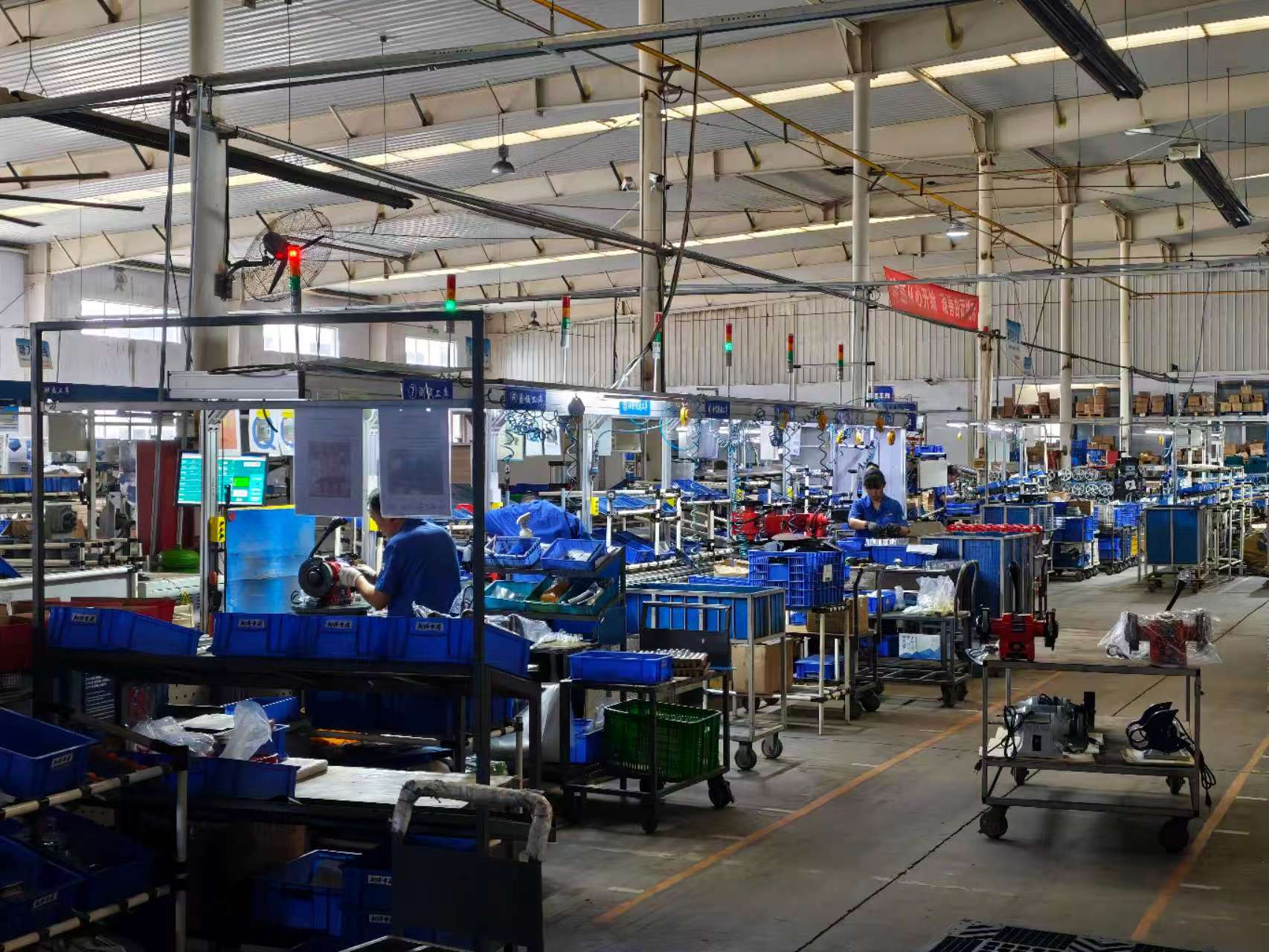
BUCKTOOL bench grinders are produced in-house; model-specific specifications, quotations and stock checks are handled directly by the manufacturer.
Need a model-specific answer?
Tell us the workpiece, the wheel diameter you need and how the machine will be used, and we will point you to the right configuration in the range — not the largest one.
Email service@bucktool.com or message us on WhatsApp (+86 151 0535 4491). Browse the full line at bucktool.com.
Have Questions or Need More Details?
Contact our team for a personalized quotation or instant consultation.
Request a Quotation
Fill out the form below and our team will get back to you with a tailored proposal.
WhatsApp Direct Chat
Prefer to chat in real-time? Message us on WhatsApp for instant assistance & quick answers.
- Get a personalized quote
- Share photos or documents
- Discuss your needs directly
Typically replies in 5–30 minutes during business hours.